Trading the European Session: What Moves, When It Moves, and Why It Matters for Quant Funded Traders
Trading the European Session: What Moves, When It Moves, and Why It Matters for Quant Funded Traders Quant Funded blog post February 21
The European trading session is one of the most important parts of the forex trading day. For serious traders participating in the Quant Funded Challenge, understanding how the European session behaves can significantly improve consistency, risk management, and overall performance.
From the Frankfurt open to the London close, this session builds the structure that often shapes the rest of the trading day. If you are trading EUR pairs, GBP crosses, or major indices, mastering the European session can give you a strategic edge.
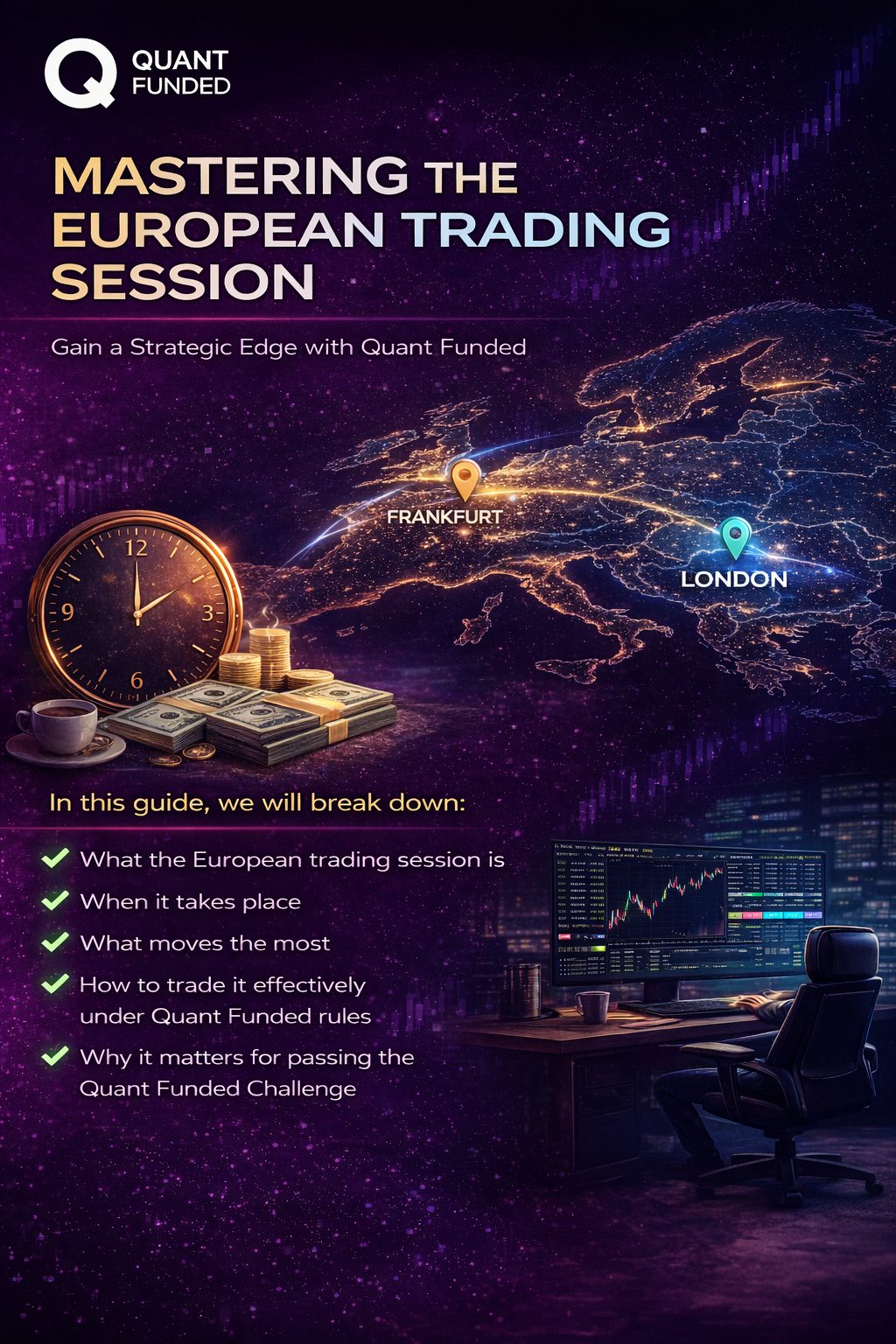
In this guide, we will break down:
- What the European trading session is
- When it takes place
- What moves the most
- How to trade it effectively under Quant Funded rules
- Why it matters for passing the Quant Funded Challenge
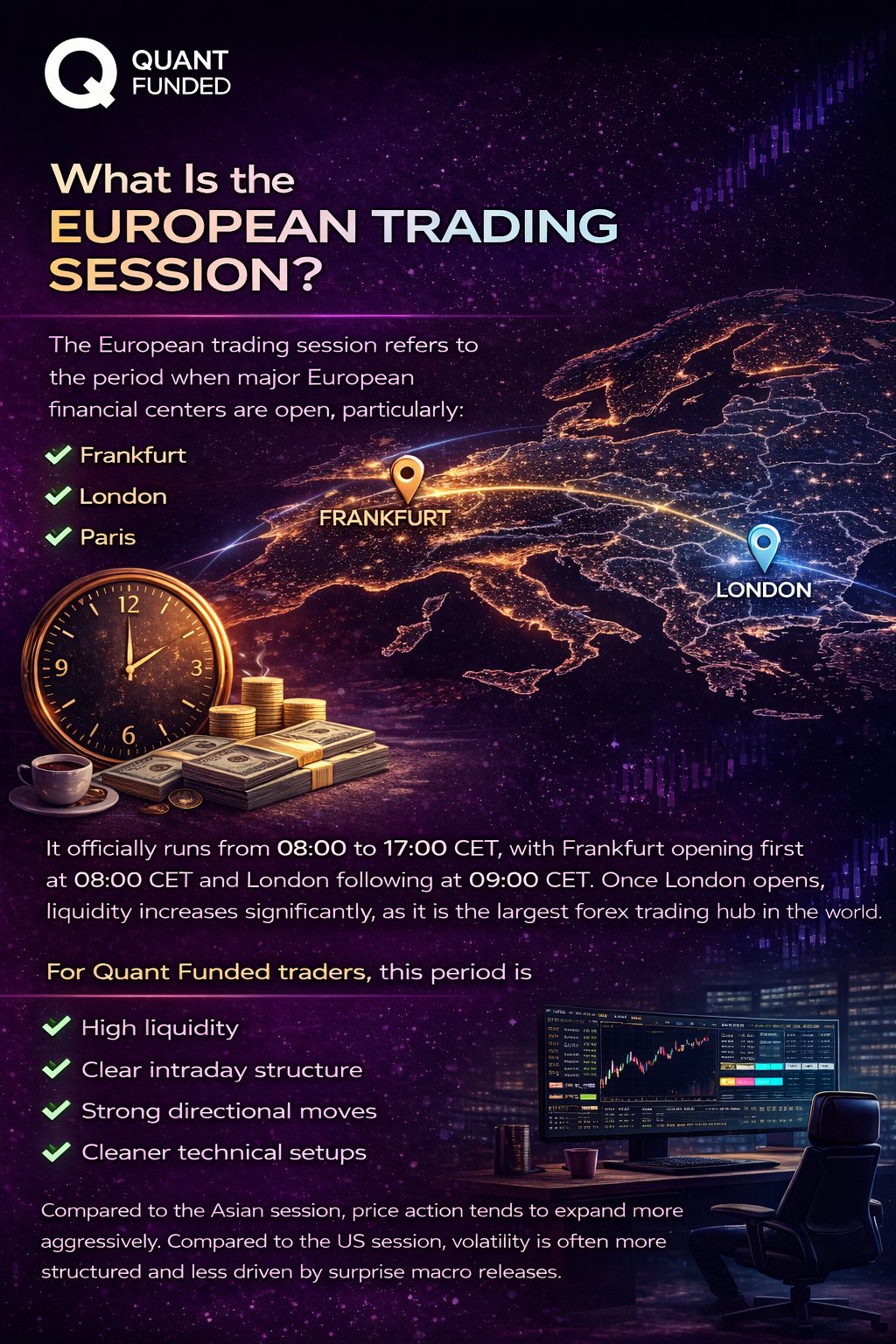
What Is the European Trading Session?
The European trading session refers to the period when major European financial centers are open, particularly:
- Frankfurt
- London
- Paris
It officially runs from 08:00 to 17:00 CET, with Frankfurt opening first at 08:00 CET and London following at 09:00 CET. Once London opens, liquidity increases significantly, as it is the largest forex trading hub in the world.
For Quant Funded traders, this period is especially attractive because it offers:
- High liquidity
- Clear intraday structure
- Strong directional moves
- Cleaner technical setups
Compared to the Asian session, price action tends to expand more aggressively. Compared to the US session, volatility is often more structured and less driven by surprise macro releases.
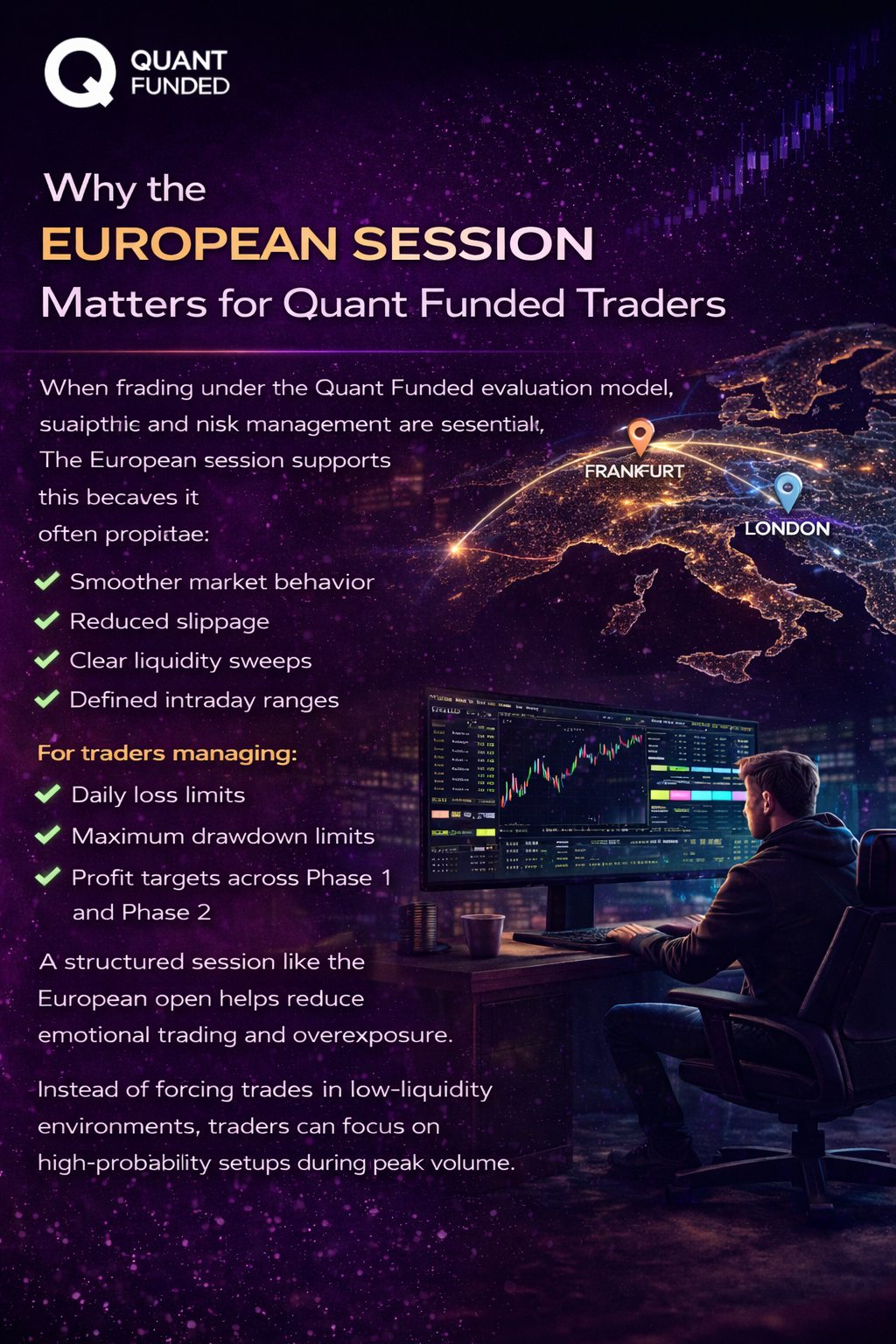
Why the European Session Matters for Quant Funded Traders
When trading under the Quant Funded evaluation model, discipline and risk management are essential. The European session supports this because it often provides:
- Smoother market behavior
- Reduced slippage
- Clear liquidity sweeps
- Defined intraday ranges
For traders managing:
- Daily loss limits
- Maximum drawdown limits
- Profit targets across Phase 1 and Phase 2
A structured session like the European open helps reduce emotional trading and overexposure.
Instead of forcing trades in low-liquidity environments, traders can focus on high-probability setups during peak volume.
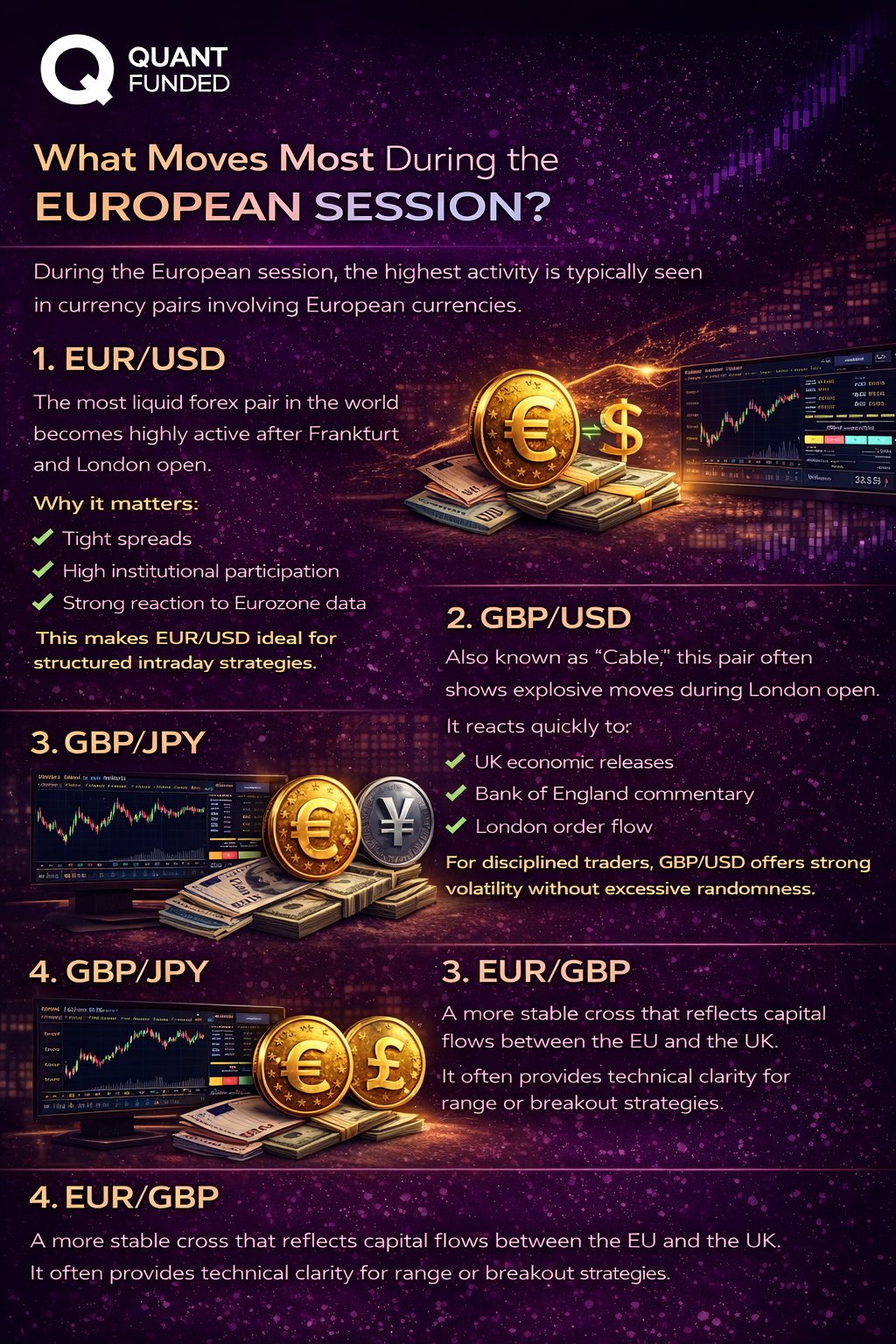
What Moves Most During the European Session?
During the European session, the highest activity is typically seen in currency pairs involving European currencies.
1. EUR/USD
The most liquid forex pair in the world becomes highly active after Frankfurt and London open.
Why it matters:
- Tight spreads
- High institutional participation
- Strong reaction to Eurozone data
This makes EUR/USD ideal for structured intraday strategies.
2. GBP/USD
Also known as “Cable,” this pair often shows explosive moves during London open.
It reacts quickly to:
- UK economic releases
- Bank of England commentary
- London order flow
For disciplined traders, GBP/USD offers strong volatility without excessive randomness.
3. GBP/JPY
This is one of the more volatile pairs during the European session.
Because it combines:
- London volatility
- Yen sensitivity to global risk sentiment
It can generate significant intraday expansion. However, it requires tighter risk management — especially important under Quant Funded drawdown rules.
4. EUR/GBP
A more stable cross that reflects capital flows between the EU and the UK. It often provides technical clarity for range or breakout strategies.
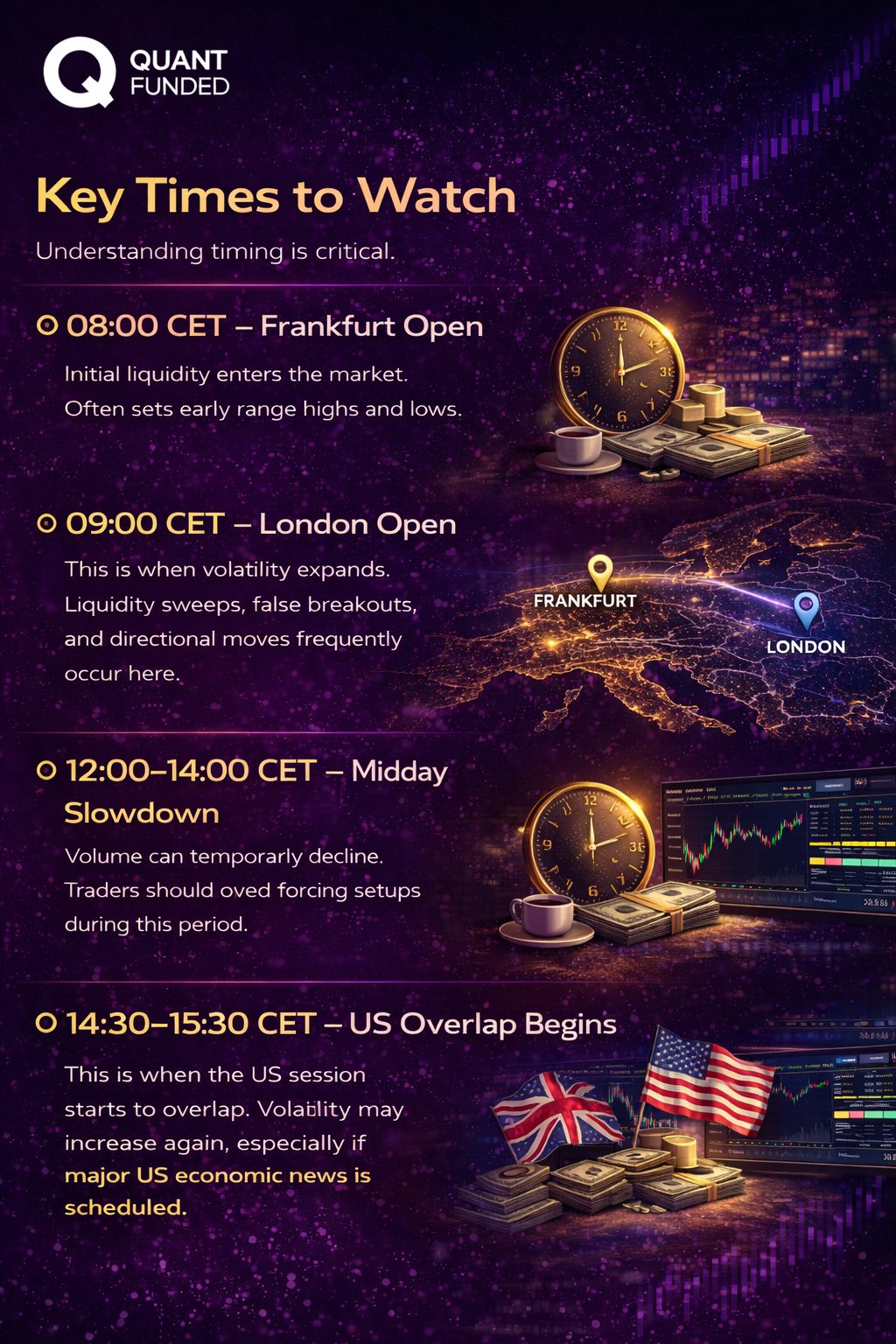
Key Times to Watch
Understanding timing is critical.
08:00 CET – Frankfurt Open
Initial liquidity enters the market. Often sets early range highs and lows.
09:00 CET – London Open
This is when volatility expands. Liquidity sweeps, false breakouts, and directional moves frequently occur here.
12:00–14:00 CET – Midday Slowdown
Volume can temporarily decline. Traders should avoid forcing setups during this period.
14:30–15:30 CET – US Overlap Begins
This is when the US session starts to overlap. Volatility may increase again, especially if major US economic news is scheduled.
Economic Data That Drives the European Session
Traders must monitor:
- CPI (Inflation Data)
- PMI Releases
- GDP
- Unemployment Rates
- ECB Announcements
- Bank of England Decisions
During these events, volatility can spike dramatically.
For Quant Funded traders, this is important because:
- News spikes can threaten daily loss limits
- Slippage may increase
- Emotional decision-making can occur
If your strategy is not built around news trading, reducing exposure during high-impact releases may protect your account.
How to Trade the European Session Under Quant Funded Rules
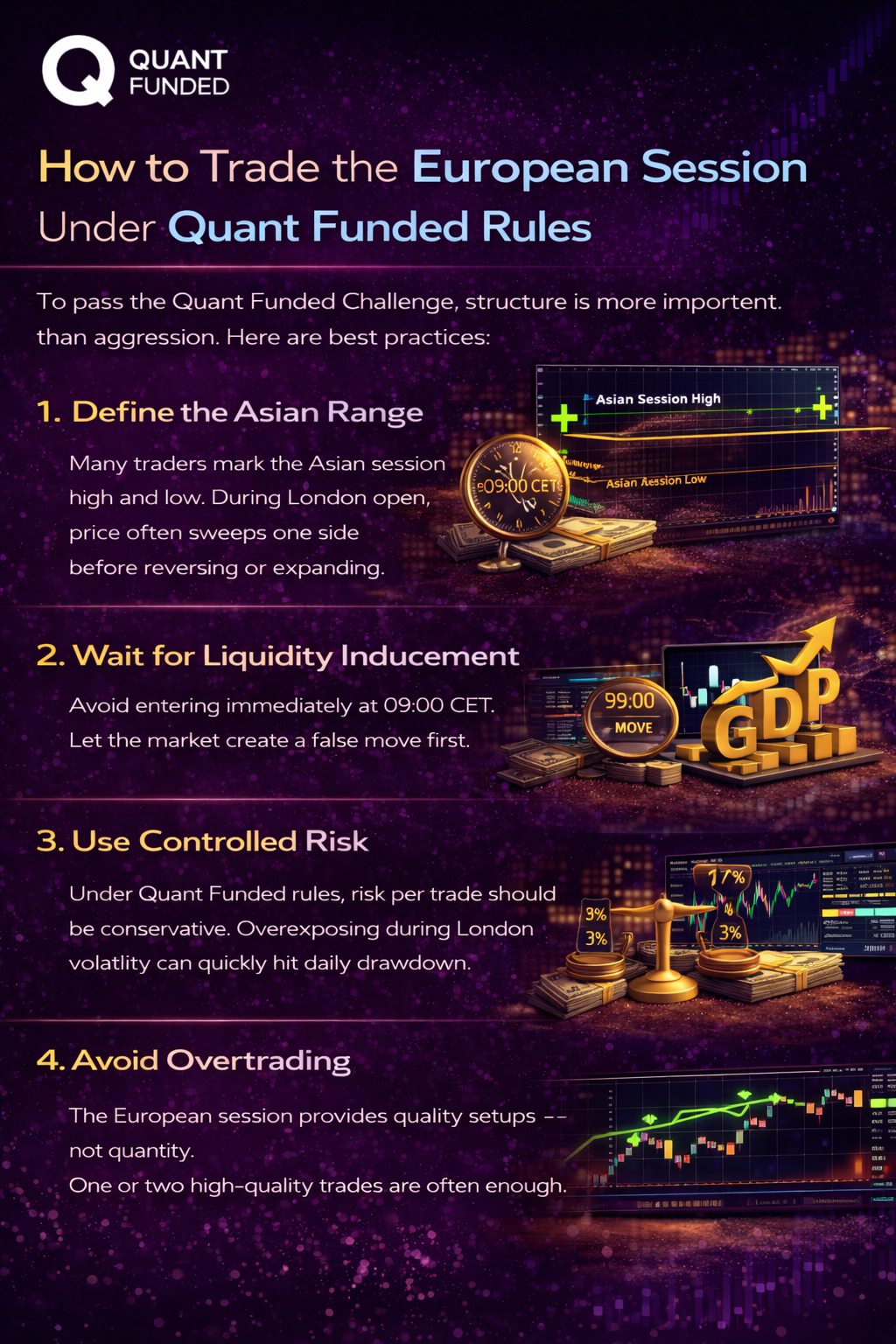
To pass the Quant Funded Challenge, structure is more important than aggression.
Here are best practices:
1. Define the Asian Range
Many traders mark the Asian session high and low. During London open, price often sweeps one side before reversing or expanding.
2. Wait for Liquidity Inducement
Avoid entering immediately at 09:00 CET. Let the market create a false move first.
3. Use Controlled Risk
Under Quant Funded rules, risk per trade should be conservative. Overexposing during London volatility can quickly hit daily drawdown limits.
4. Avoid Overtrading
The European session provides quality setups — not quantity. One or two high-quality trades are often enough.
Psychological Advantages of Trading the European Session
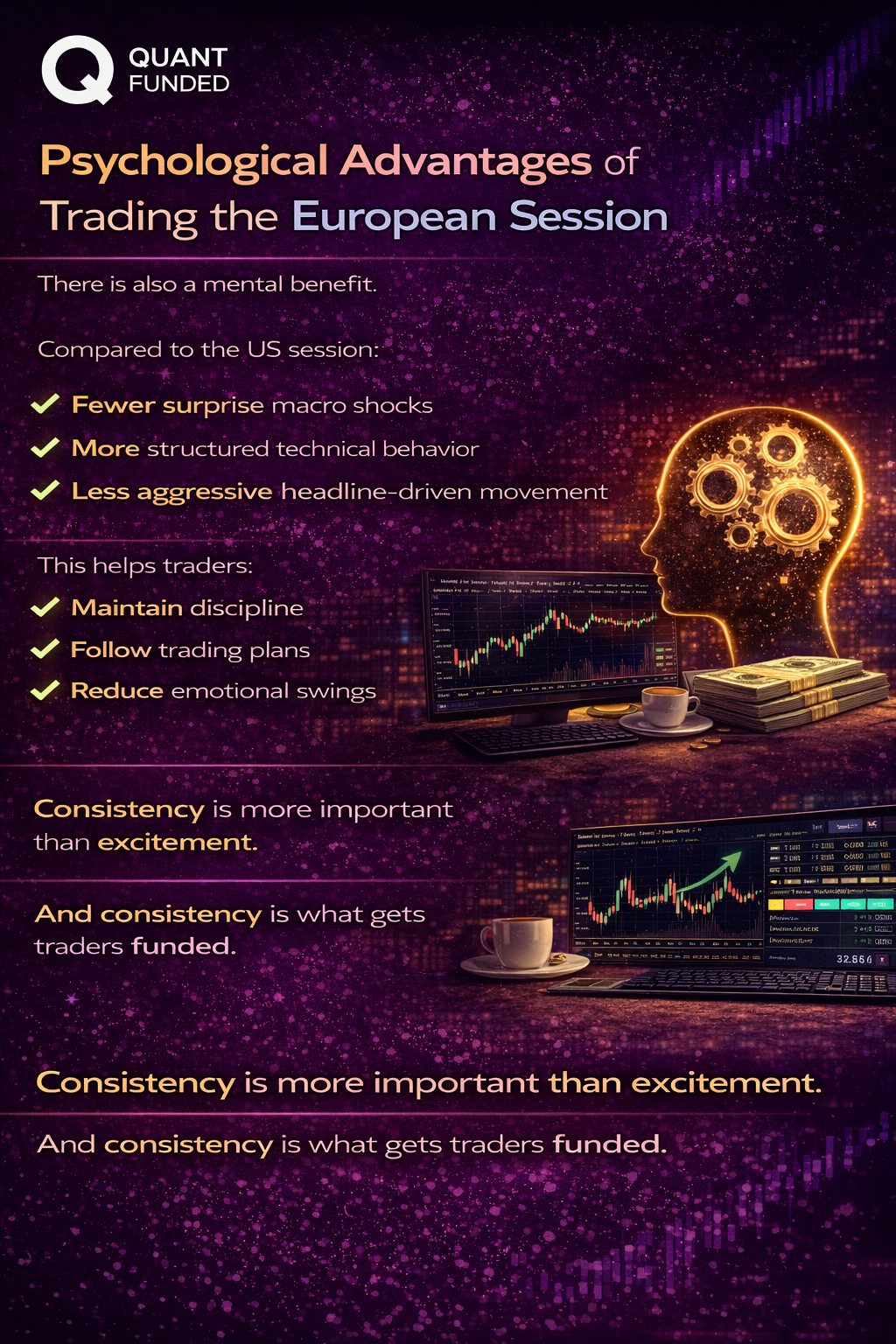
There is also a mental benefit.
Compared to the US session:
- Fewer surprise macro shocks
- More structured technical behavior
- Less aggressive headline-driven movement
This helps traders:
- Maintain discipline
- Follow trading plans
- Reduce emotional swings
Consistency is more important than excitement.
And consistency is what gets traders funded.
Why the European Session Is Ideal for Passing the Quant Funded Challenge
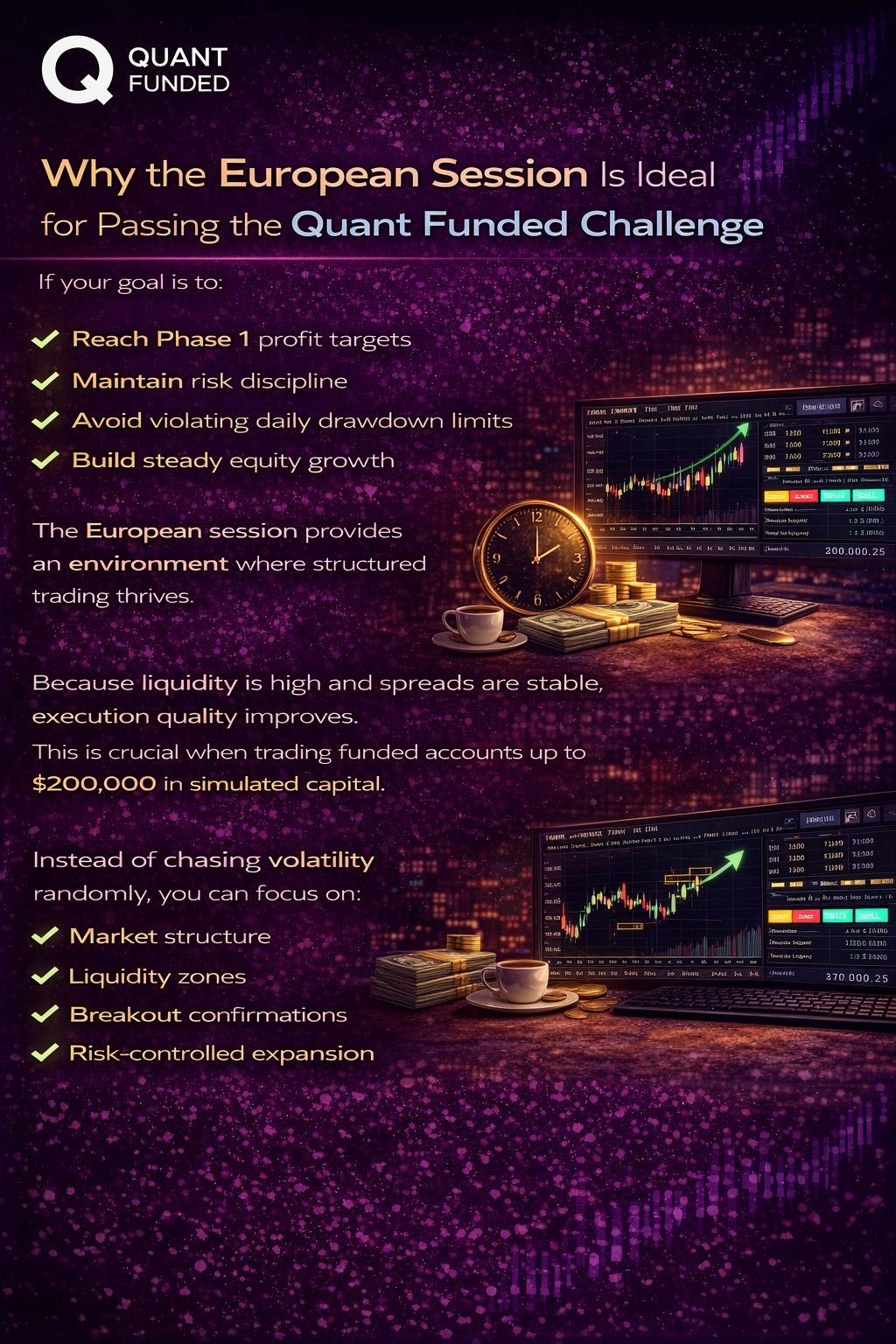
If your goal is to:
- Reach Phase 1 profit targets
- Maintain risk discipline
- Avoid violating daily drawdown limits
- Build steady equity growth
The European session provides an environment where structured trading thrives.
Because liquidity is high and spreads are stable, execution quality improves. This is crucial when trading funded accounts up to $200,000 in simulated capital.
Instead of chasing volatility randomly, you can focus on:
- Market structure
- Liquidity zones
- Breakout confirmations
- Risk-controlled expansion
Final Thoughts
The European trading session is more than just a time window. It is the structural backbone of the trading day.
For Quant Funded traders, it offers:
- High liquidity
- Clear market behavior
- Strong currency pair activity
- Reduced randomness
- Optimal conditions for disciplined execution
If you are serious about passing the Quant Funded Challenge and scaling toward larger capital allocations, mastering the European session should be part of your trading framework.
The market rewards preparation and structure.
The European session provides both.
Now the question is — are you ready to trade it with discipline?