Is Scalping the Right Trading Strategy for You? A Complete Guide by Quant Funded
In the fast-paced world of financial markets, traders are constantly searching for strategies that deliver consistent results. One approach that continues to attract attention is scalping—a high-frequency trading style designed to capture small price movements repeatedly throughout the day.
But is scalping the right fit for your personality, goals, and trading environment?
In this guide, Quant Funded breaks down everything you need to know about scalping, including how it works, its pros and cons, and how to determine if it aligns with your trading style.
What Is Scalping in Trading?
Scalping is a short-term trading strategy where traders aim to profit from small price fluctuations. Instead of holding positions for hours or days, scalpers typically hold trades for seconds to minutes.
The idea is simple:
Accumulate many small wins that add up over time.
Key Characteristics of Scalping:
-
High trade frequency (dozens or even hundreds per day)
-
Small profit targets per trade
-
Tight stop losses
-
Fast decision-making
-
Reliance on precision and timing
Scalping is commonly used in forex, indices, and crypto markets, where liquidity and volatility create frequent opportunities.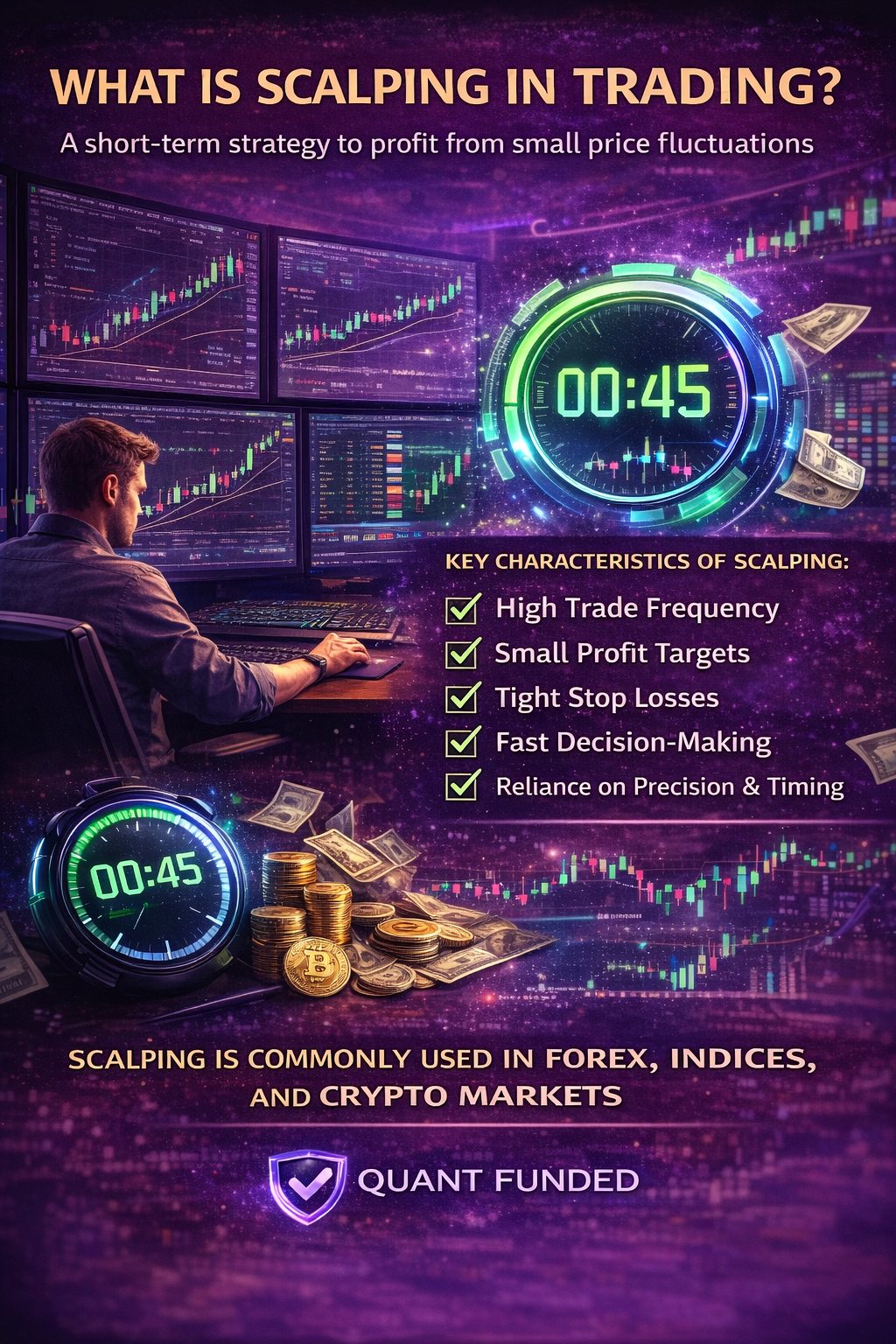
How Scalping Works
Scalping focuses on micro-movements in price, often using lower timeframes like the 1-minute or 5-minute charts.
Successful scalpers typically rely on:
-
Momentum shifts
-
Support and resistance zones
-
Breakouts and fakeouts
-
Order flow and liquidity levels
Because the profit per trade is small, execution must be extremely precise. Even a slight delay can turn a winning trade into a losing one.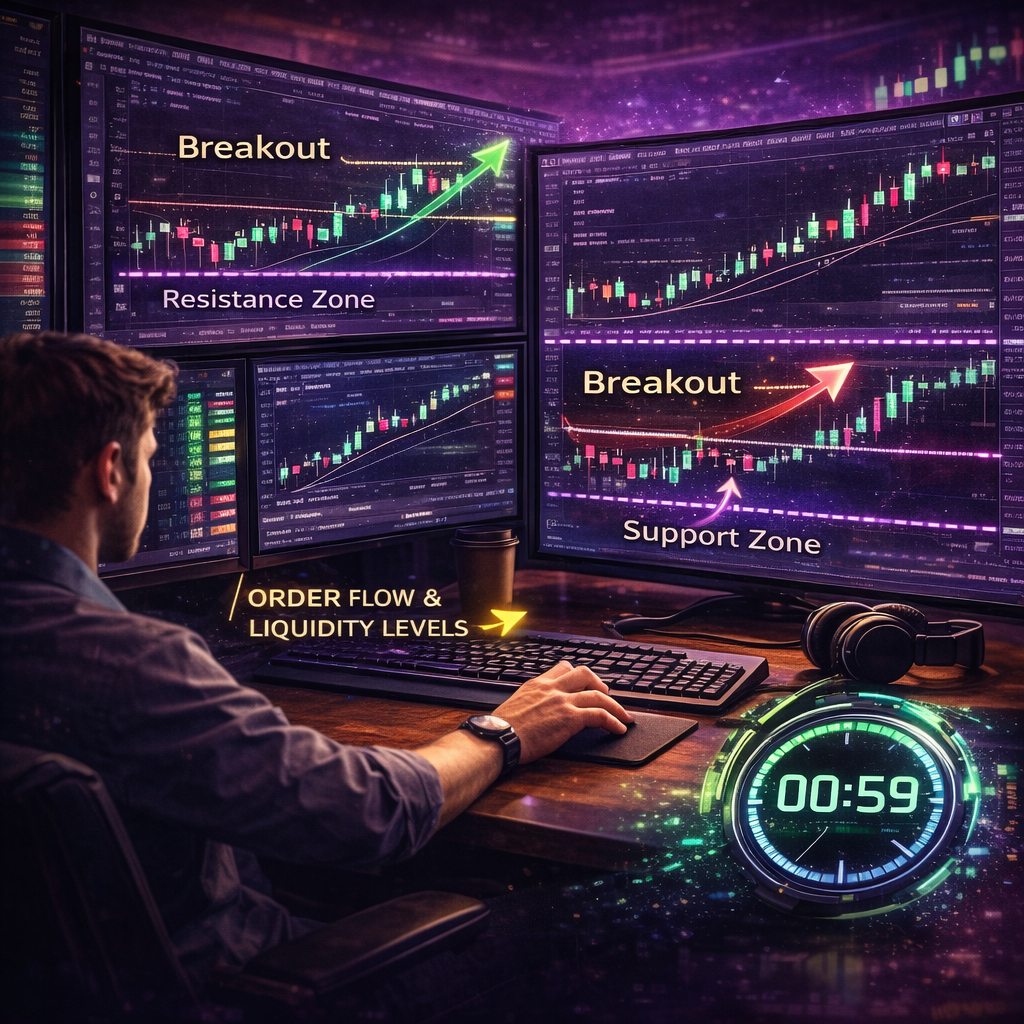
Core Skills Every Scalper Needs
Scalping is not just about strategy—it’s about execution, discipline, and mindset.
1. Lightning-Fast Decision Making
Scalpers must act instantly. Hesitation often leads to missed entries or worse—losses.
2. Emotional Control
With rapid trades comes rapid emotional swings. Successful scalpers:
-
Avoid revenge trading
-
Stay calm after losses
-
Reset quickly between trades
3. Strong Risk Management
Since profits are small, one large loss can wipe out multiple wins. Effective scalpers:
-
Use tight stop losses
-
Maintain consistent position sizing
-
Never over-leverage
4. Technical Setup & Infrastructure
Your tools matter more in scalping than in any other strategy.
You need:
-
Low-latency execution
-
Tight spreads
-
Reliable internet connection
-
A fast trading platform

Advantages of Scalping
Scalping offers several benefits, especially for active traders who enjoy fast-paced environments.
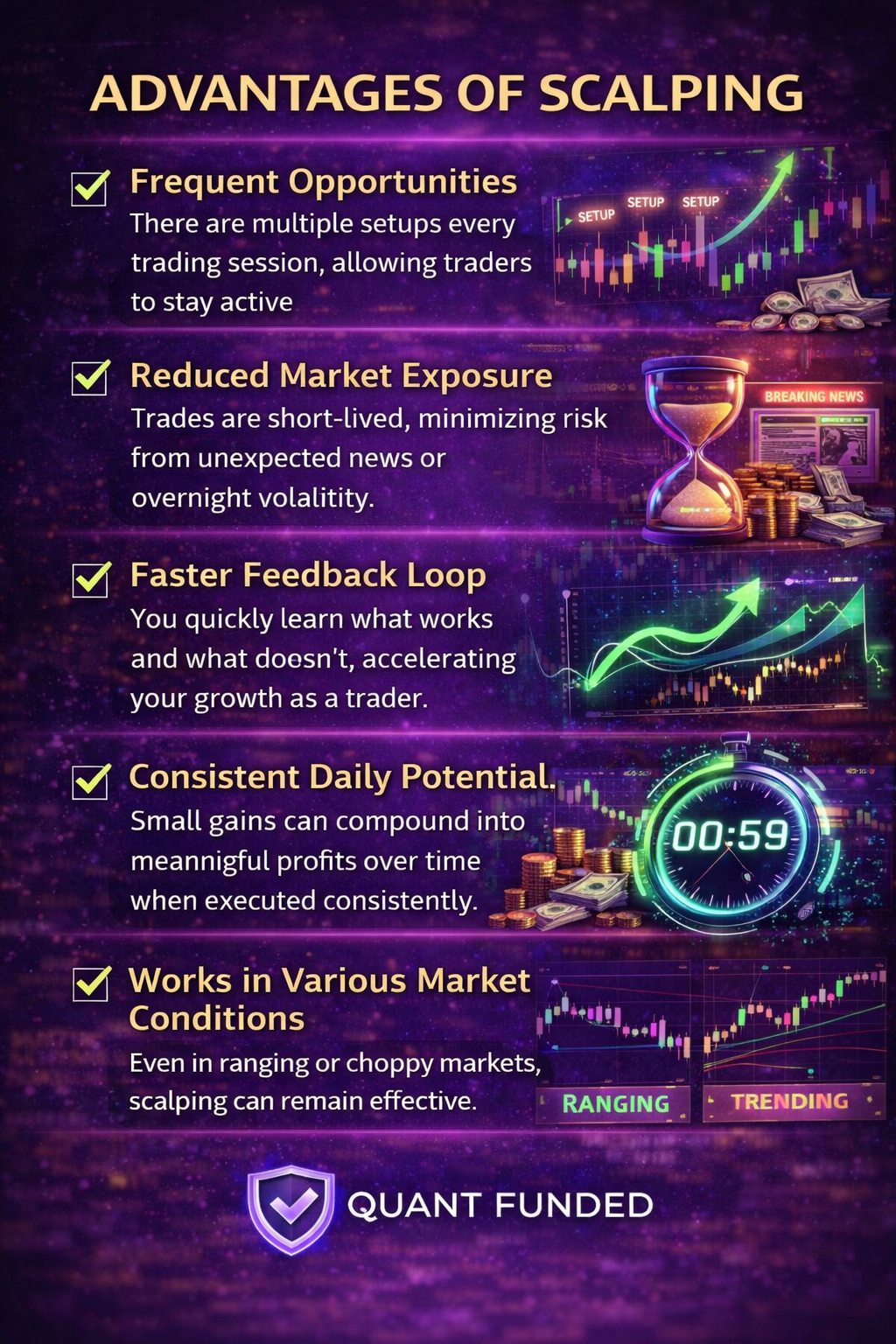
✔ Frequent Opportunities
There are multiple setups every trading session, allowing traders to stay active.
✔ Reduced Market Exposure
Trades are short-lived, minimizing risk from unexpected news or overnight volatility.
✔ Faster Feedback Loop
You quickly learn what works and what doesn’t, accelerating your growth as a trader.
✔ Consistent Daily Potential
Small gains can compound into meaningful profits over time when executed consistently.
✔ Works in Various Market Conditions
Even in ranging or choppy markets, scalping can remain effective.
Disadvantages of Scalping
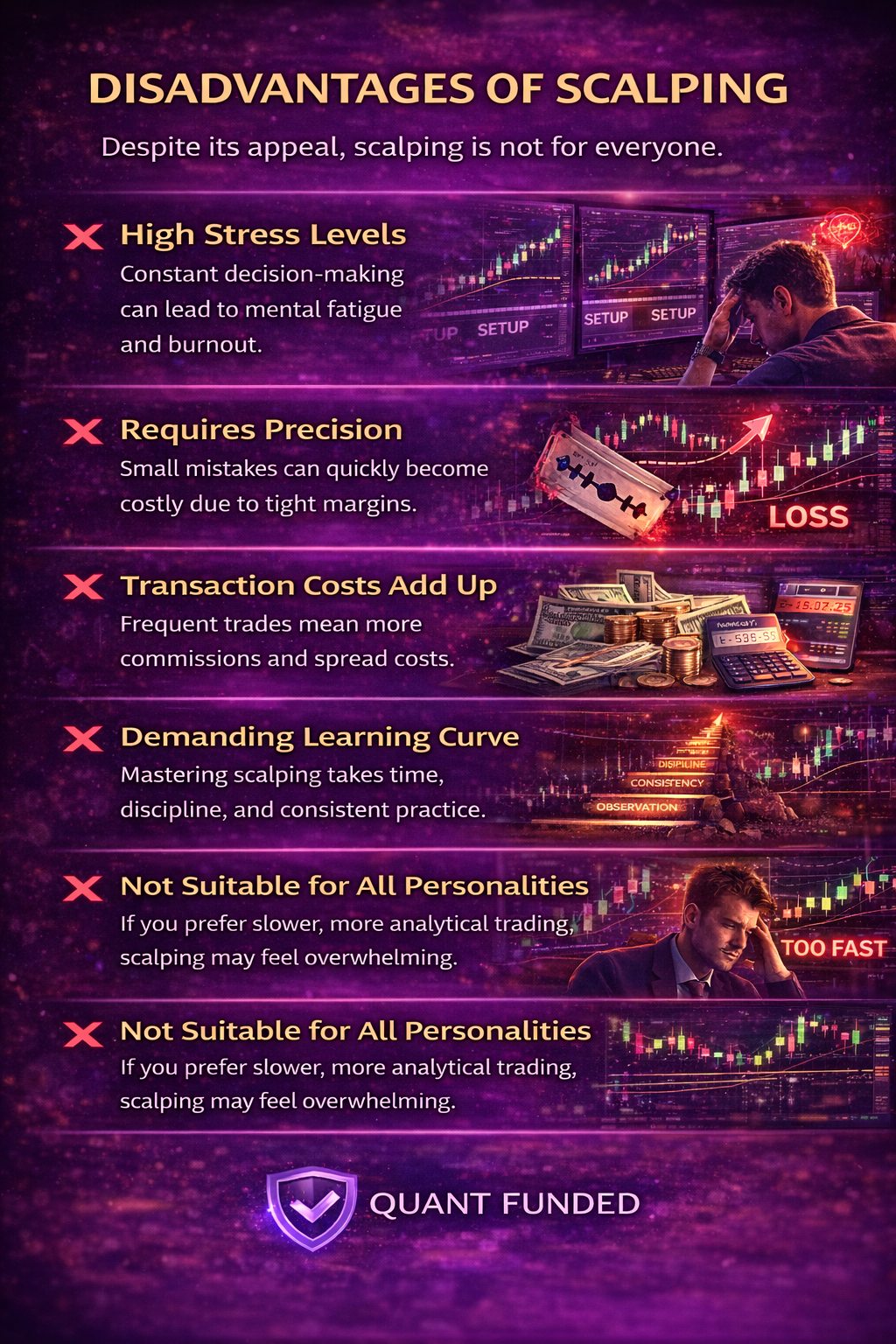
Despite its appeal, scalping is not for everyone.
✖ High Stress Levels
Constant decision-making can lead to mental fatigue and burnout.
✖ Requires Precision
Small mistakes can quickly become costly due to tight margins.
✖ Transaction Costs Add Up
Frequent trades mean more commissions and spread costs.
✖ Demanding Learning Curve
Mastering scalping takes time, discipline, and consistent practice.
✖ Not Suitable for All Personalities
If you prefer slower, more analytical trading, scalping may feel overwhelming.
Is Scalping Right for You?
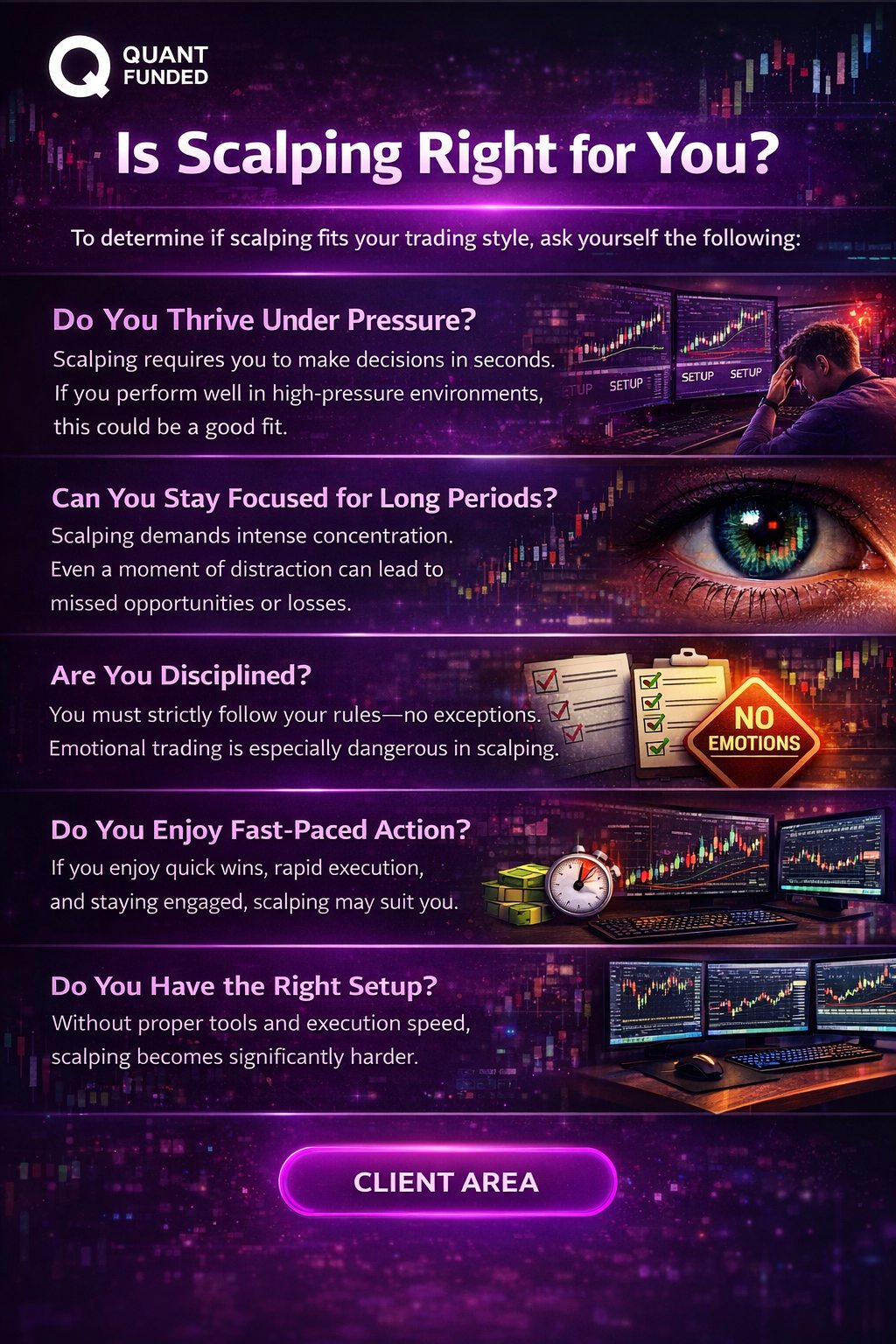
To determine if scalping fits your trading style, ask yourself the following:
Do You Thrive Under Pressure?
Scalping requires you to make decisions in seconds. If you perform well in high-pressure environments, this could be a good fit.
Can You Stay Focused for Long Periods?
Scalping demands intense concentration. Even a moment of distraction can lead to missed opportunities or losses.
Are You Disciplined?
You must strictly follow your rules—no exceptions. Emotional trading is especially dangerous in scalping.
Do You Enjoy Fast-Paced Action?
If you enjoy quick wins, rapid execution, and staying engaged, scalping may suit you.
Do You Have the Right Setup?
Without proper tools and execution speed, scalping becomes significantly harder.
Scalping vs. Other Trading Styles
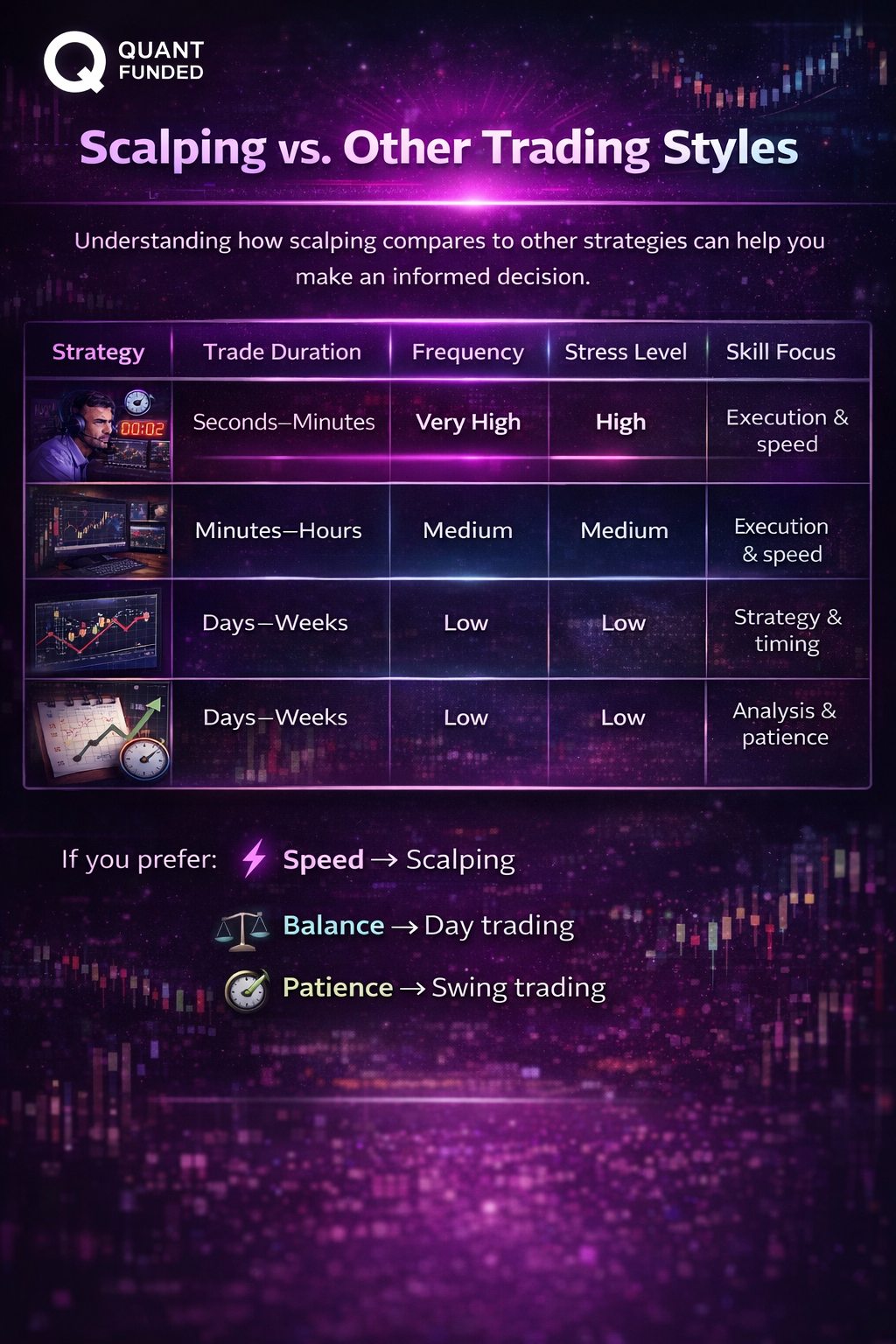
Understanding how scalping compares to other strategies can help you make an informed decision.
| Strategy | Trade Duration | Frequency | Stress Level | Skill Focus |
|---|---|---|---|---|
| Scalping | Seconds–Minutes | Very High | High | Execution & speed |
| Day Trading | Minutes–Hours | Medium | Medium | Strategy & timing |
| Swing Trading | Days–Weeks | Low | Low | Analysis & patience |
If you prefer:
-
Speed → Scalping
-
Balance → Day trading
-
Patience → Swing trading
Tips to Get Started with Scalping
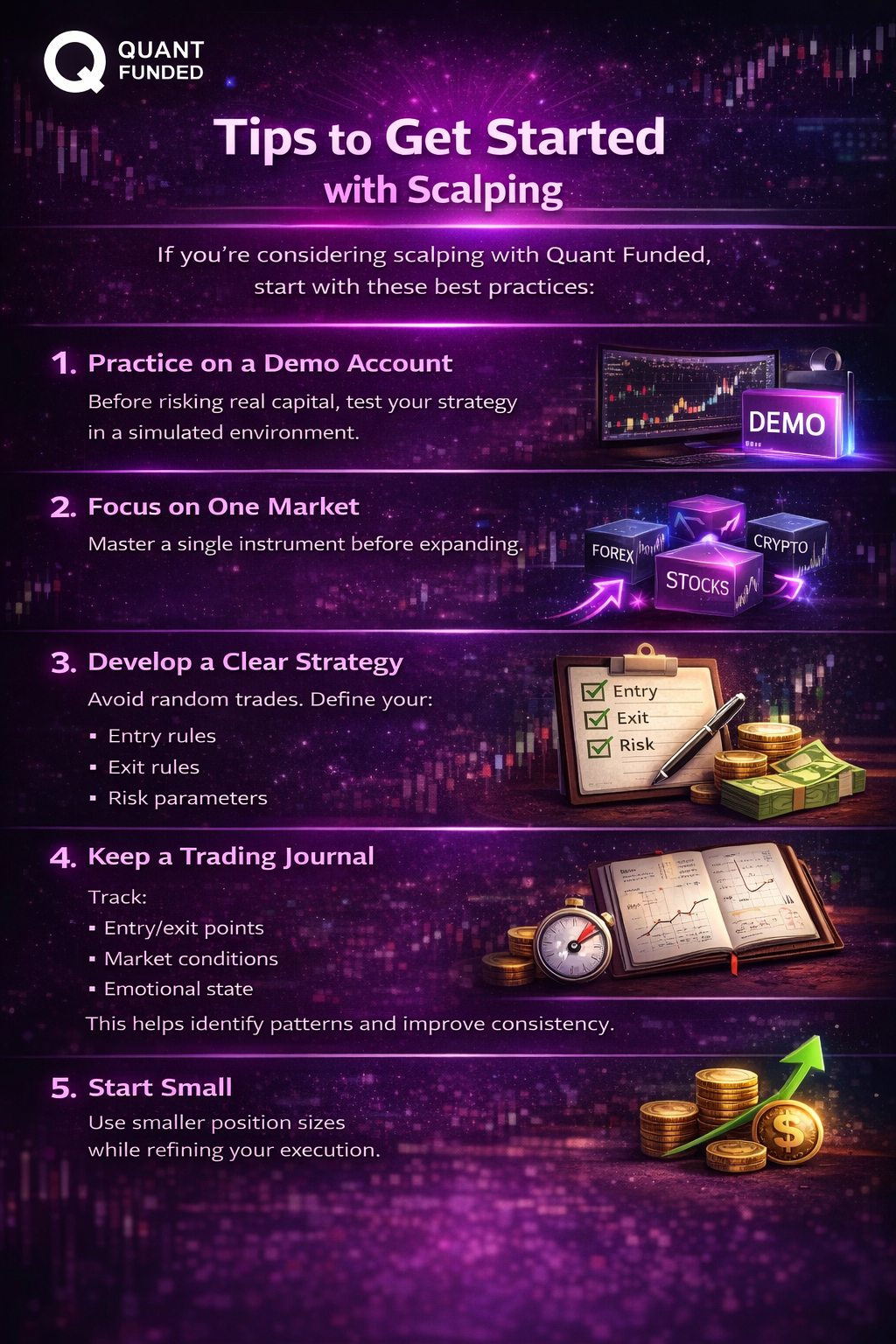
If you’re considering scalping with Quant Funded, start with these best practices:
1. Practice on a Demo Account
Before risking real capital, test your strategy in a simulated environment.
2. Focus on One Market
Master a single instrument before expanding.
3. Develop a Clear Strategy
Avoid random trades. Define your:
-
Entry rules
-
Exit rules
-
Risk parameters
4. Keep a Trading Journal
Track:
-
Entry/exit points
-
Market conditions
-
Emotional state
This helps identify patterns and improve consistency.
5. Start Small
Use smaller position sizes while refining your execution.
Why Scalping Works Well with Funded Accounts
Scalping can be especially effective when trading with a funded account like Quant Funded because:
-
You can scale your strategy without risking personal capital
-
Consistent small gains align with evaluation rules
-
Risk management becomes more structured
However, discipline remains the key factor—regardless of account size.
Final Thoughts
Scalping is one of the most demanding yet rewarding trading strategies available today. It rewards discipline, speed, and precision—but punishes hesitation and emotional decision-making.
If you are someone who thrives in fast-paced environments, enjoys real-time analysis, and can maintain strict control over risk, scalping could be the perfect strategy for you.
On the other hand, if you prefer a slower, more methodical approach, you may find greater success with swing or position trading.
At Quant Funded, we believe the best strategy is the one that aligns with your personality, mindset, and long-term goals.
Ready to Take Your Trading to the Next Level?
Join Quant Funded today and test your scalping strategy in a professional trading environment. With the right tools, discipline, and mindset, you can turn small market movements into consistent performance.