How to Trade in the Zone: Mastering Trading Psychology for Consistent Profits | Quant Funded
Introduction
In the world of proprietary trading, success is often associated with strategy, technical analysis, and market knowledge. However, at Quant Funded, we understand that the true edge lies beyond charts and indicators—it lies in your mindset. Trading psychology is the hidden force that separates consistently profitable traders from those who struggle.
To truly excel, traders must learn how to “trade in the zone”—a mental state where decision-making becomes objective, disciplined, and free from emotional interference. In this guide, we break down the key principles of trading psychology and how you can apply them to achieve consistent results.
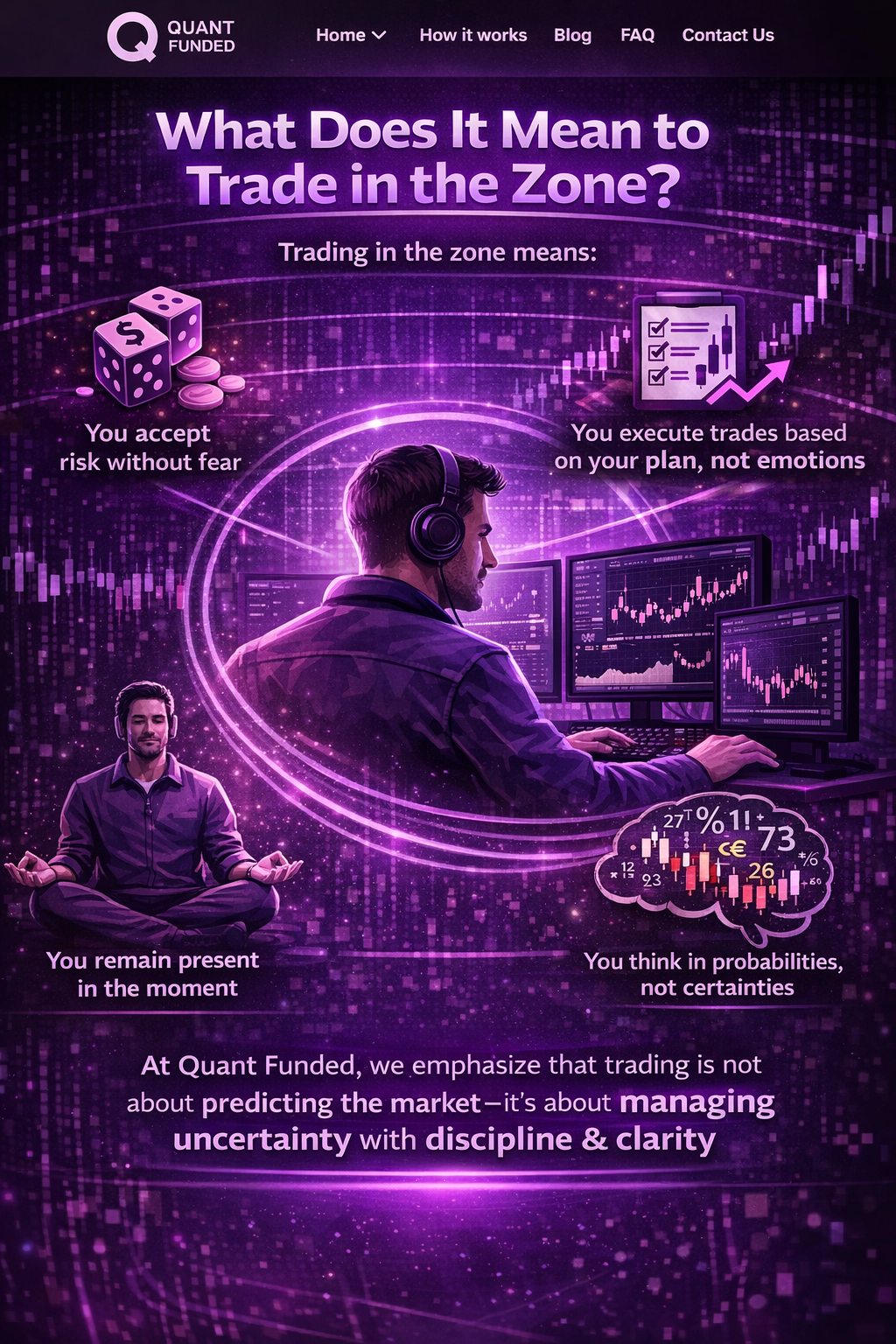
What Does It Mean to Trade in the Zone?
Trading in the zone refers to a psychological state where a trader operates with complete focus, confidence, and emotional neutrality. In this state:
- You accept risk without fear
- You execute trades based on your plan, not emotions
- You remain present in the moment
- You think in probabilities, not certainties
At Quant Funded, we emphasize that trading is not about predicting the market—it’s about managing uncertainty with discipline and clarity.
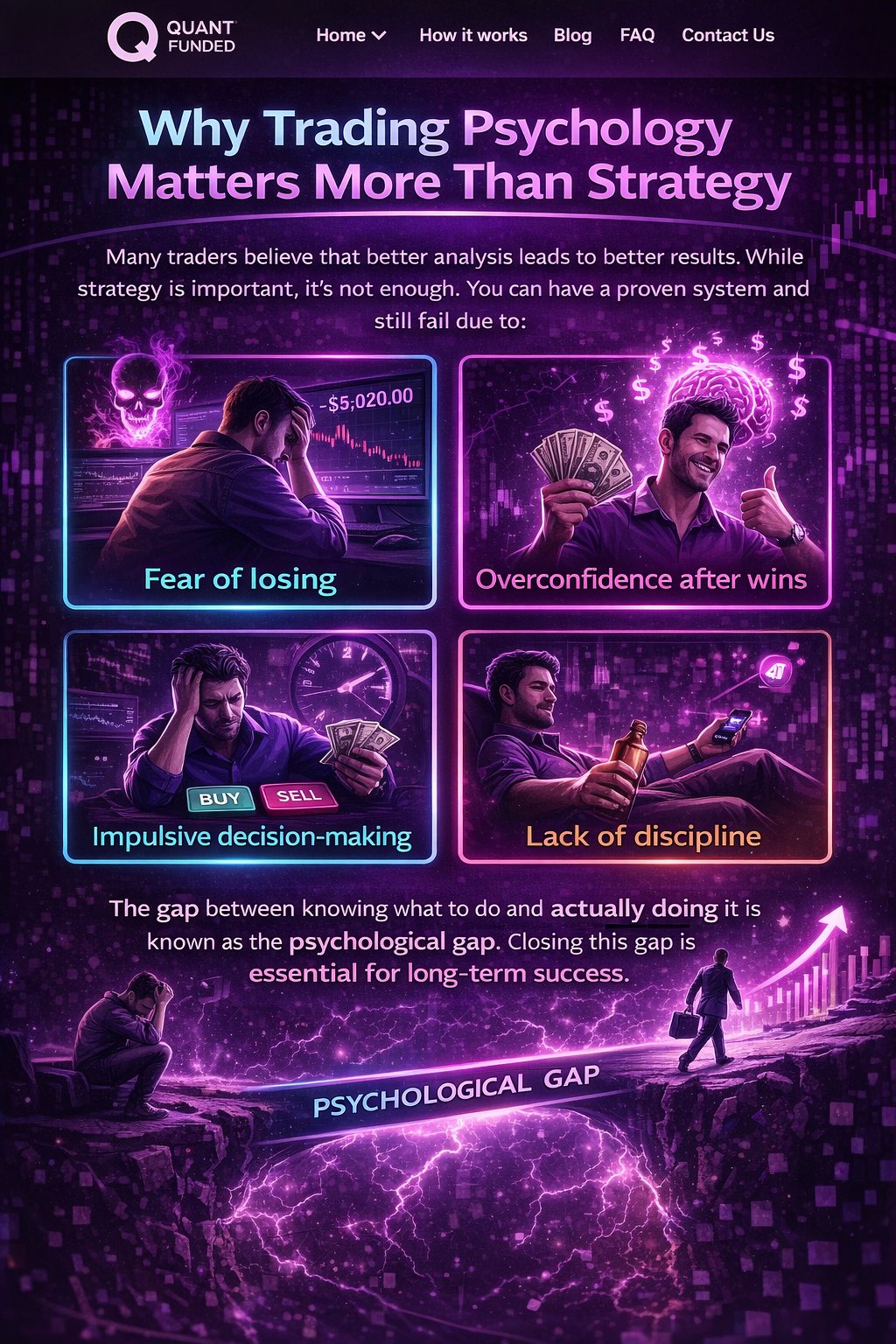
Why Trading Psychology Matters More Than Strategy
Many traders believe that better analysis leads to better results. While strategy is important, it’s not enough. You can have a proven system and still fail due to:
- Fear of losing
- Overconfidence after wins
- Impulsive decision-making
- Lack of discipline
The gap between knowing what to do and actually doing it is known as the psychological gap. Closing this gap is essential for long-term success.
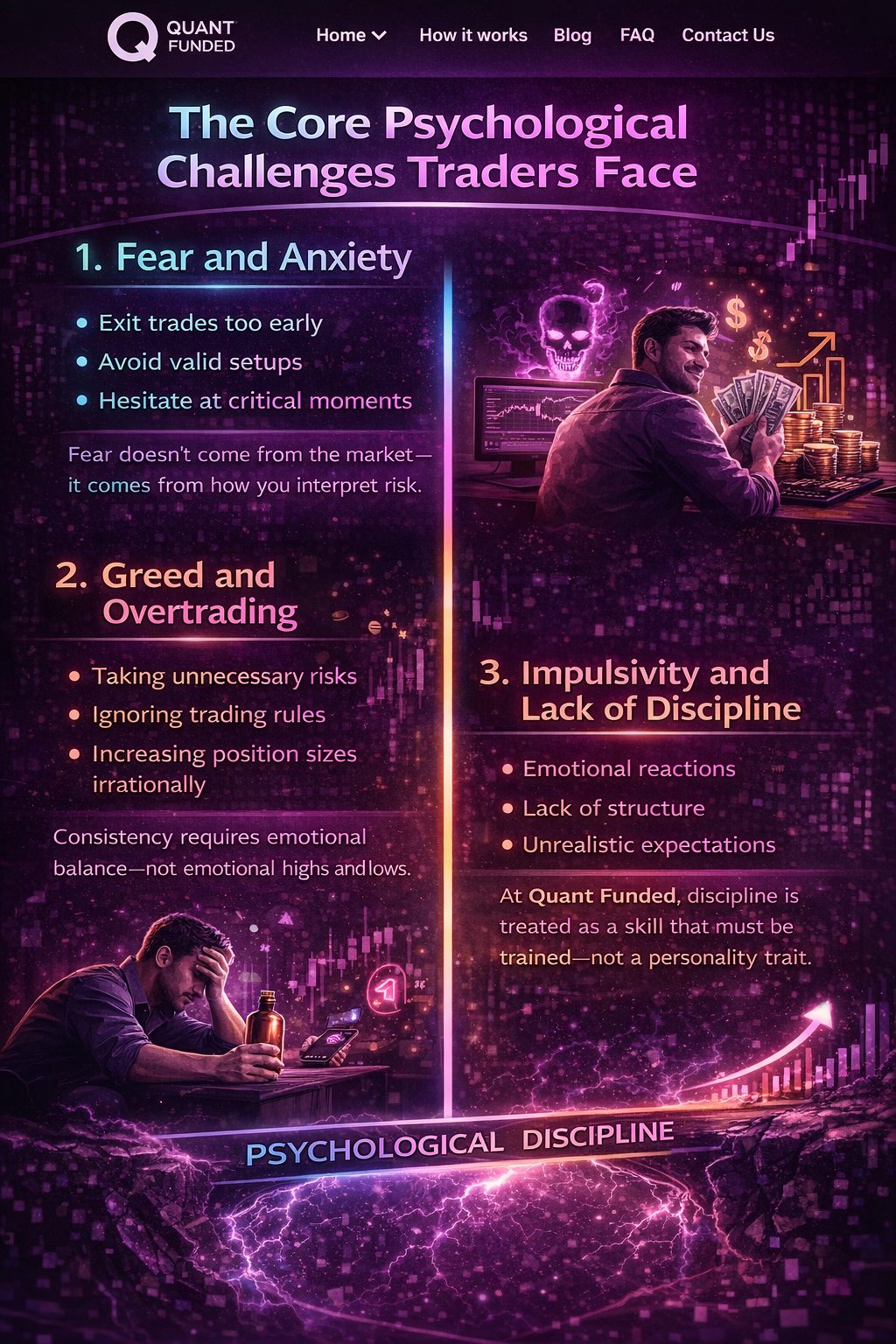
The Core Psychological Challenges Traders Face
1. Fear and Anxiety
Fear is one of the biggest obstacles in trading. It can cause you to:
- Exit trades too early
- Avoid valid setups
- Hesitate at critical moments
Fear doesn’t come from the market—it comes from how you interpret risk.
2. Greed and Overtrading
After a few winning trades, traders often become overconfident. This leads to:
- Taking unnecessary risks
- Ignoring trading rules
- Increasing position sizes irrationally
Consistency requires emotional balance—not emotional highs and lows.
3. Impulsivity and Lack of Discipline
Without discipline, even the best strategy fails. Impulsive trading often results from:
- Emotional reactions
- Lack of structure
- Unrealistic expectations
At Quant Funded, discipline is treated as a skill that must be trained—not a personality trait.
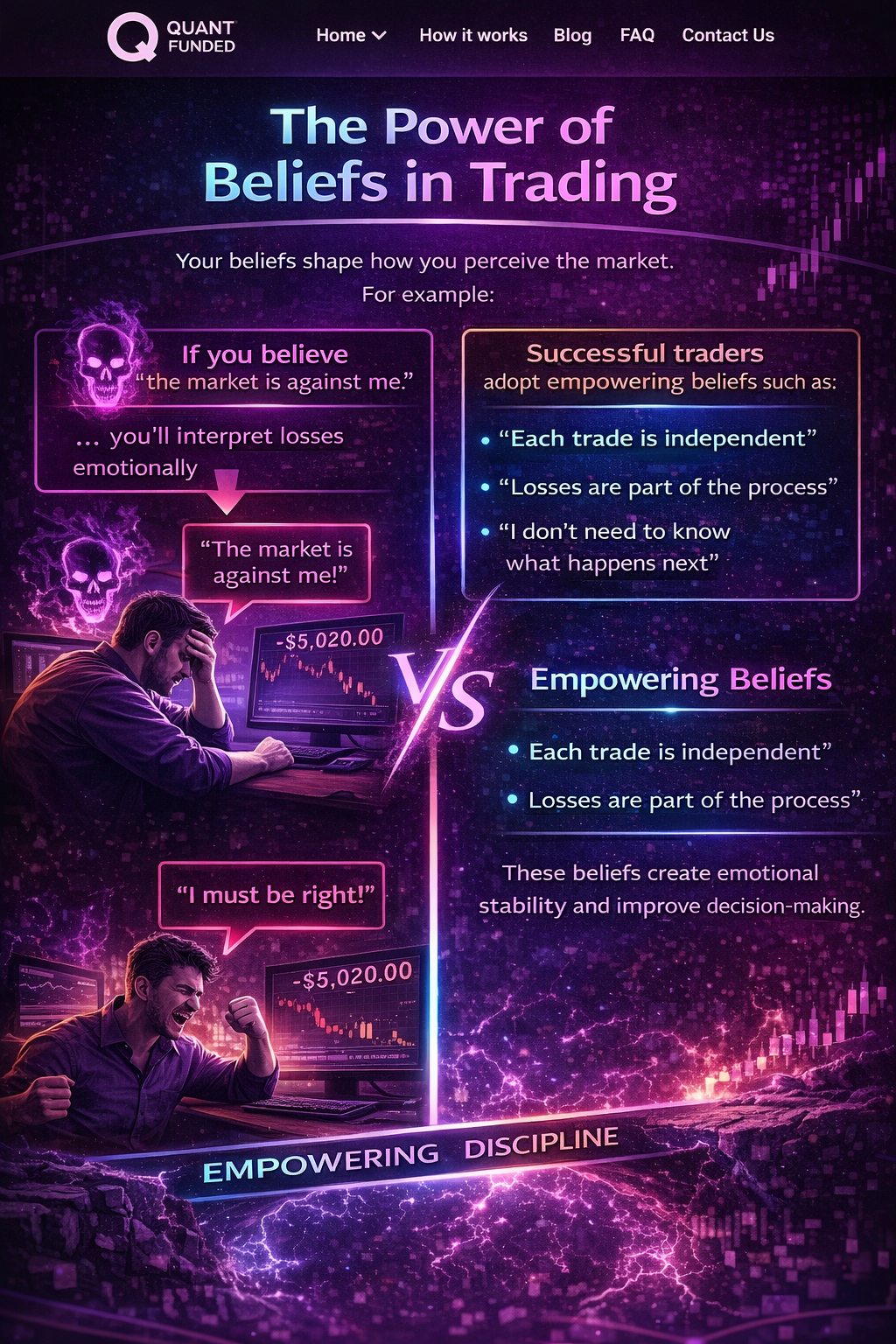
The Power of Beliefs in Trading
Your beliefs shape how you perceive the market. For example:
- If you believe “the market is against me,” you’ll interpret losses emotionally
- If you believe “I must be right,” you’ll resist cutting losses
Successful traders adopt empowering beliefs such as:
- “Each trade is independent”
- “Losses are part of the process”
- “I don’t need to know what happens next”
These beliefs create emotional stability and improve decision-making.
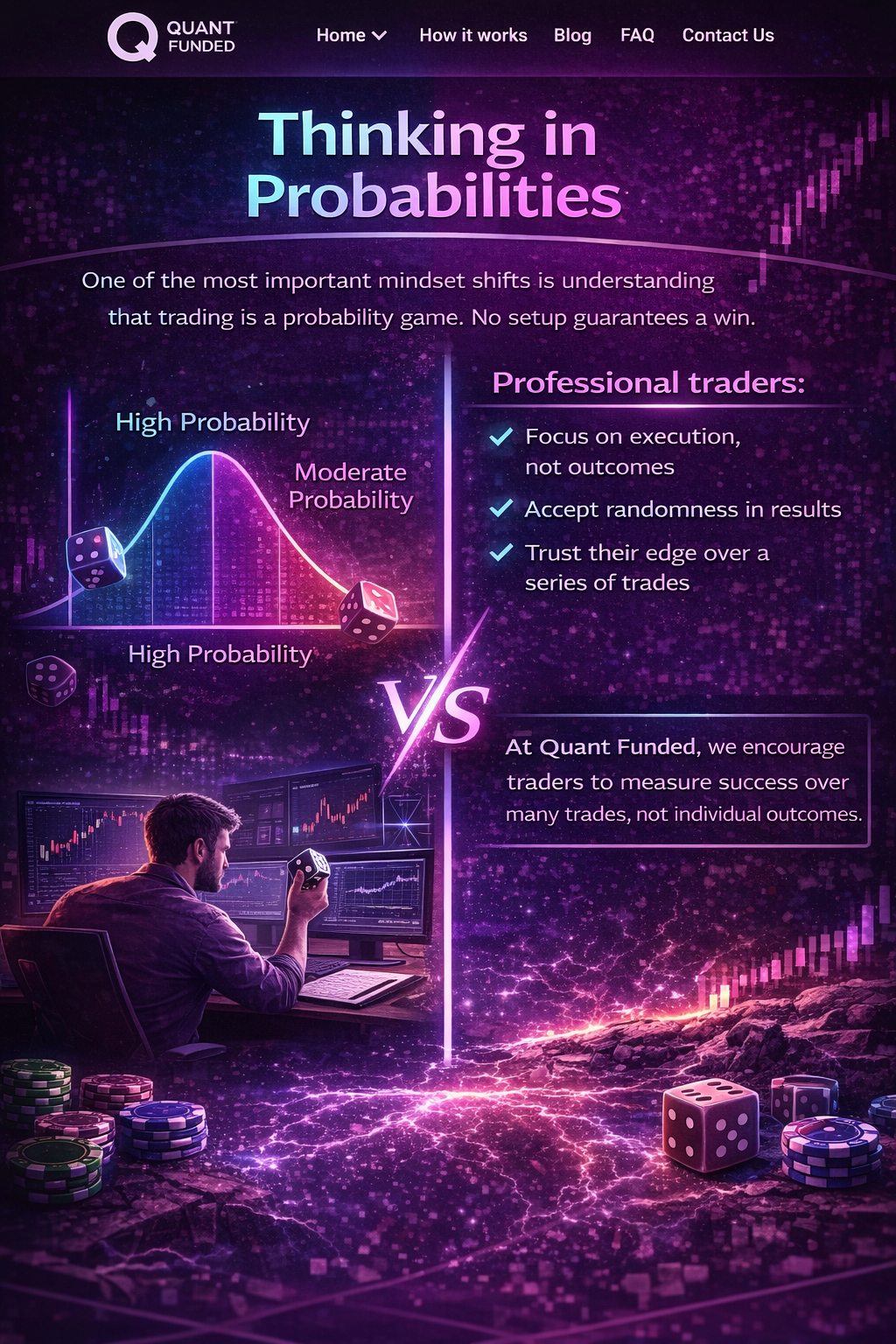
Thinking in Probabilities
One of the most important mindset shifts is understanding that trading is a probability game. No setup guarantees a win.
Professional traders:
- Focus on execution, not outcomes
- Accept randomness in results
- Trust their edge over a series of trades
At Quant Funded, we encourage traders to measure success over many trades, not individual outcomes.
Developing a Winning Trading Mindset
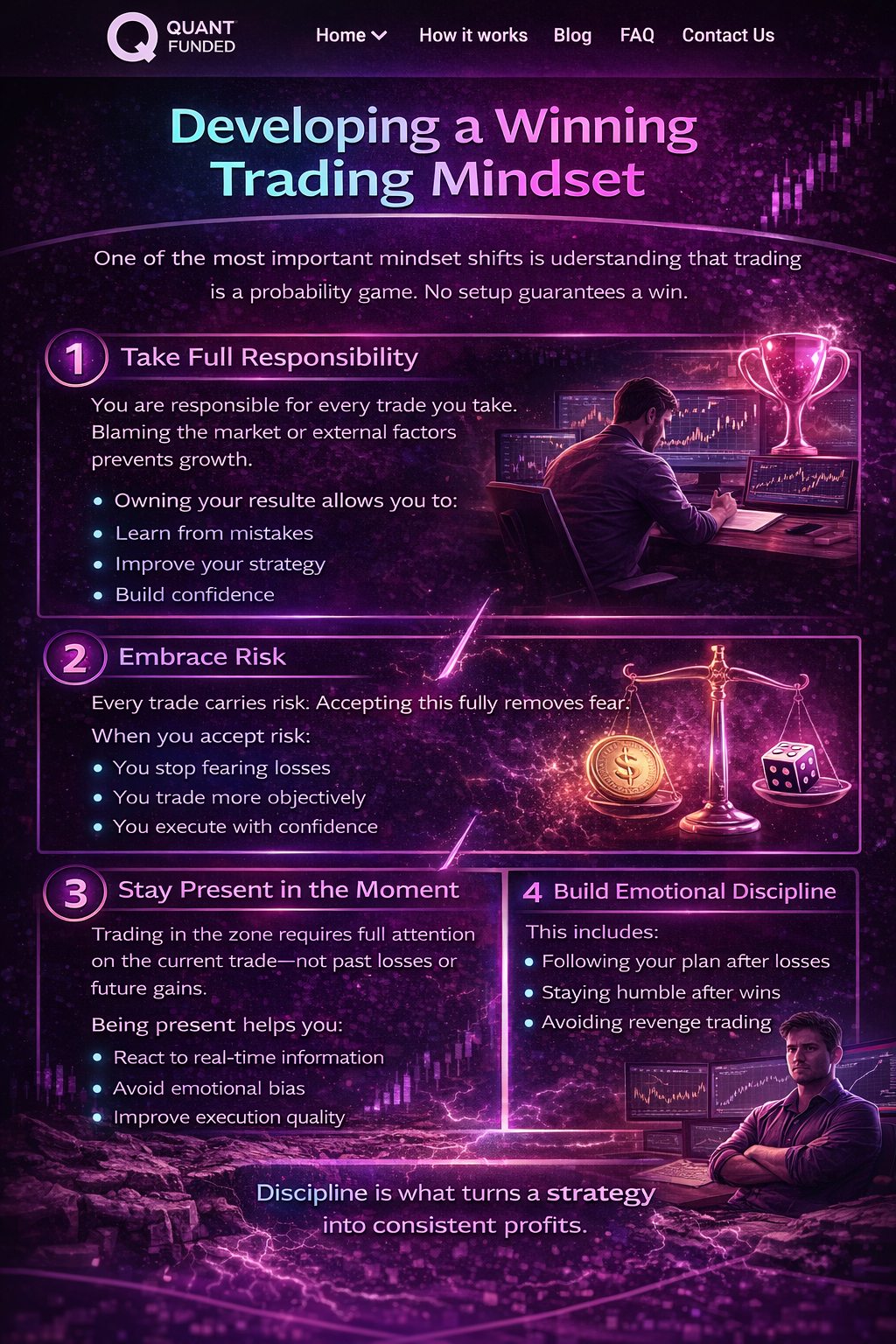
1. Take Full Responsibility
You are responsible for every trade you take. Blaming the market or external factors prevents growth.
Owning your results allows you to:
- Learn from mistakes
- Improve your strategy
- Build confidence
2. Embrace Risk
Every trade carries risk. Accepting this fully removes fear.
When you accept risk:
- You stop fearing losses
- You trade more objectively
- You execute with confidence
3. Stay Present in the Moment
Trading in the zone requires full attention on the current trade—not past losses or future gains.
Being present helps you:
- React to real-time information
- Avoid emotional bias
- Improve execution quality
4. Build Emotional Discipline
Emotional discipline means staying consistent regardless of outcomes.
This includes:
- Following your plan after losses
- Staying humble after wins
- Avoiding revenge trading
Discipline is what turns a strategy into consistent profits.
The Role of Self-Awareness in Trading Success
Many trading mistakes are rooted in subconscious beliefs and past experiences. For example:
- Fear of failure may cause hesitation
- Desire for validation may lead to overtrading
- Past losses may create emotional bias
Self-awareness allows you to identify these patterns and correct them.
At Quant Funded, we encourage traders to journal their trades and emotions to uncover hidden behaviors.
Creating Your Trading Rules and Structure
Unlike traditional jobs, trading offers complete freedom—but this freedom can be dangerous without structure.
Successful traders create:
- Clear entry and exit rules
- Risk management guidelines
- Daily trading routines
Structure reduces emotional decision-making and increases consistency.
Entering the Zone: Practical Steps
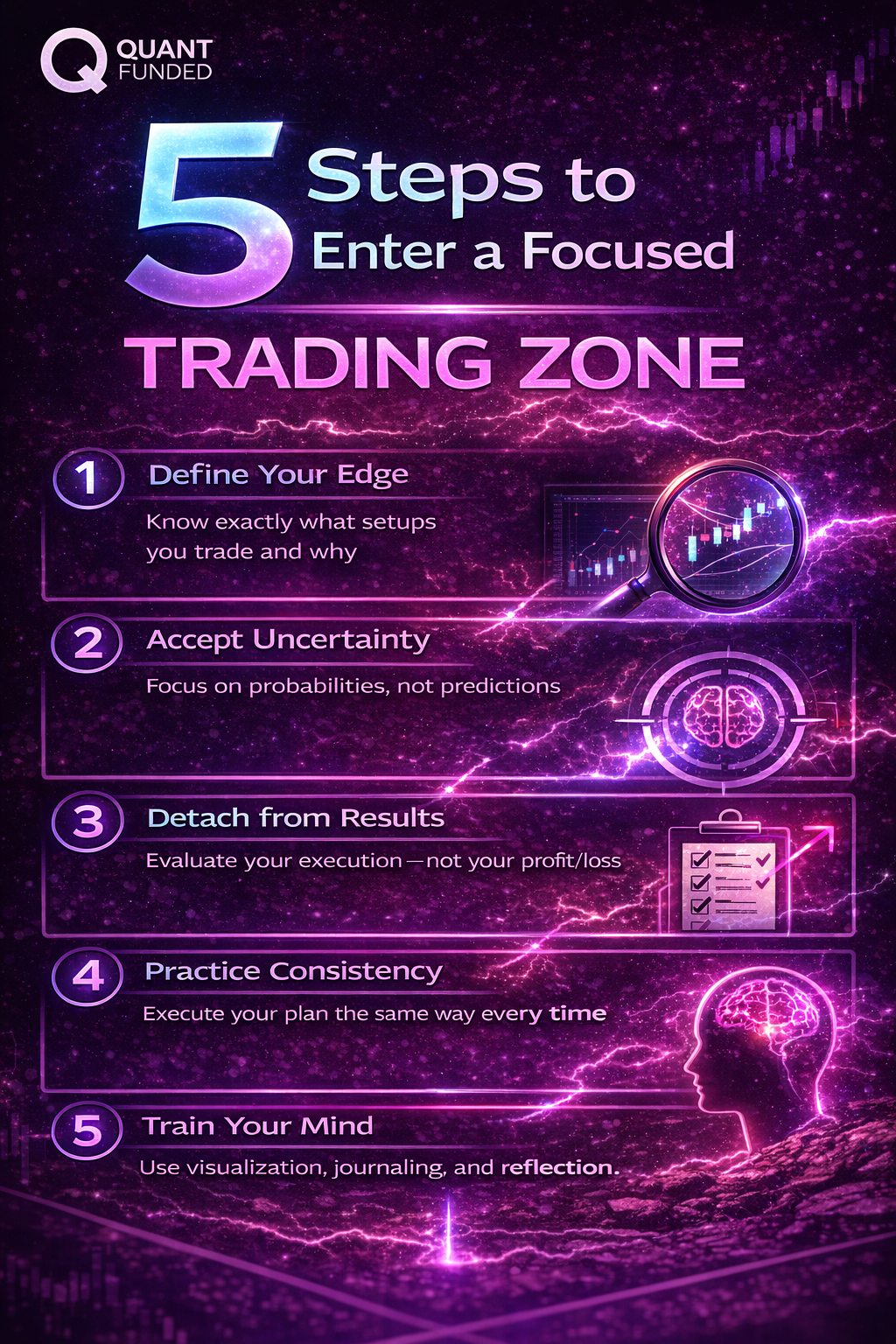
To consistently trade in the zone, follow these steps:
1. Define Your Edge
Know exactly what setups you trade and why.
2. Accept Uncertainty
Stop trying to predict outcomes—focus on probabilities.
3. Detach from Results
Judge yourself based on execution, not profit or loss.
4. Practice Consistency
Execute your plan the same way every time.
5. Train Your Mind
Use techniques like visualization, journaling, and reflection.
Common Mistakes to Avoid
Even experienced traders fall into psychological traps. Avoid:
- Chasing the market
- Ignoring stop losses
- Trading without a plan
- Letting emotions dictate decisions
Recognizing these mistakes is the first step to eliminating them.
How Quant Funded Supports Your Trading Growth
At Quant Funded, we go beyond capital—we focus on developing elite traders.
Our approach includes:
- Emphasis on risk management
- Encouraging disciplined execution
- Supporting trader development through structured challenges
We believe that success in trading is not just about skill—it’s about mindset.
Conclusion
Trading in the zone is not a mystical concept—it’s a skill that can be developed through self-awareness, discipline, and practice. While strategies and analysis are important, they are only effective when paired with the right mindset.
By embracing uncertainty, thinking in probabilities, and maintaining emotional discipline, you can unlock consistent performance in the markets.
At Quant Funded, we empower traders to master both the technical and psychological aspects of trading—because true success comes from within.
Keywords optimized: trading psychology, trade in the zone, trading mindset, emotional discipline trading, risk management trading, prop firm trading, Quant Funded, consistent trading profits