How to Read the Market Through Liquidity: A Practical Guide for Prop Traders
Liquidity is one of the most important concepts in trading — and one of the most misunderstood. Many traders hear the term regularly, yet only a small percentage truly understand how liquidity shapes price movement, influences volatility, and determines where the market is most likely to react.
For traders participating in prop firm evaluations like Quant Funded, understanding liquidity is not optional. It is a critical skill that helps improve entries, avoid unnecessary drawdowns, and align trading decisions with how real market participants operate.
This article breaks down liquidity in a clear, practical way and explains how prop traders can use it to trade more efficiently and consistently.
What Liquidity Really Means in Trading
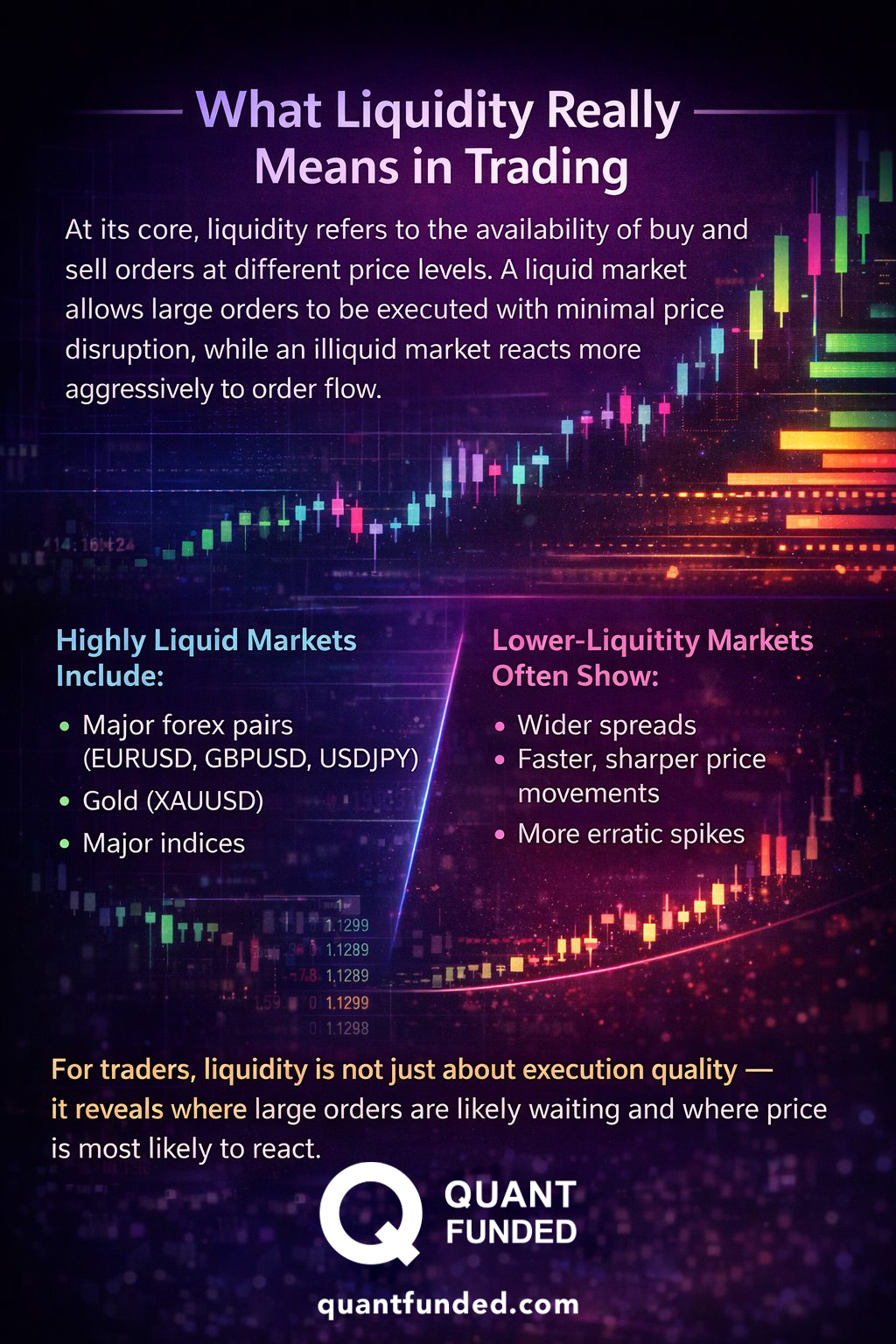
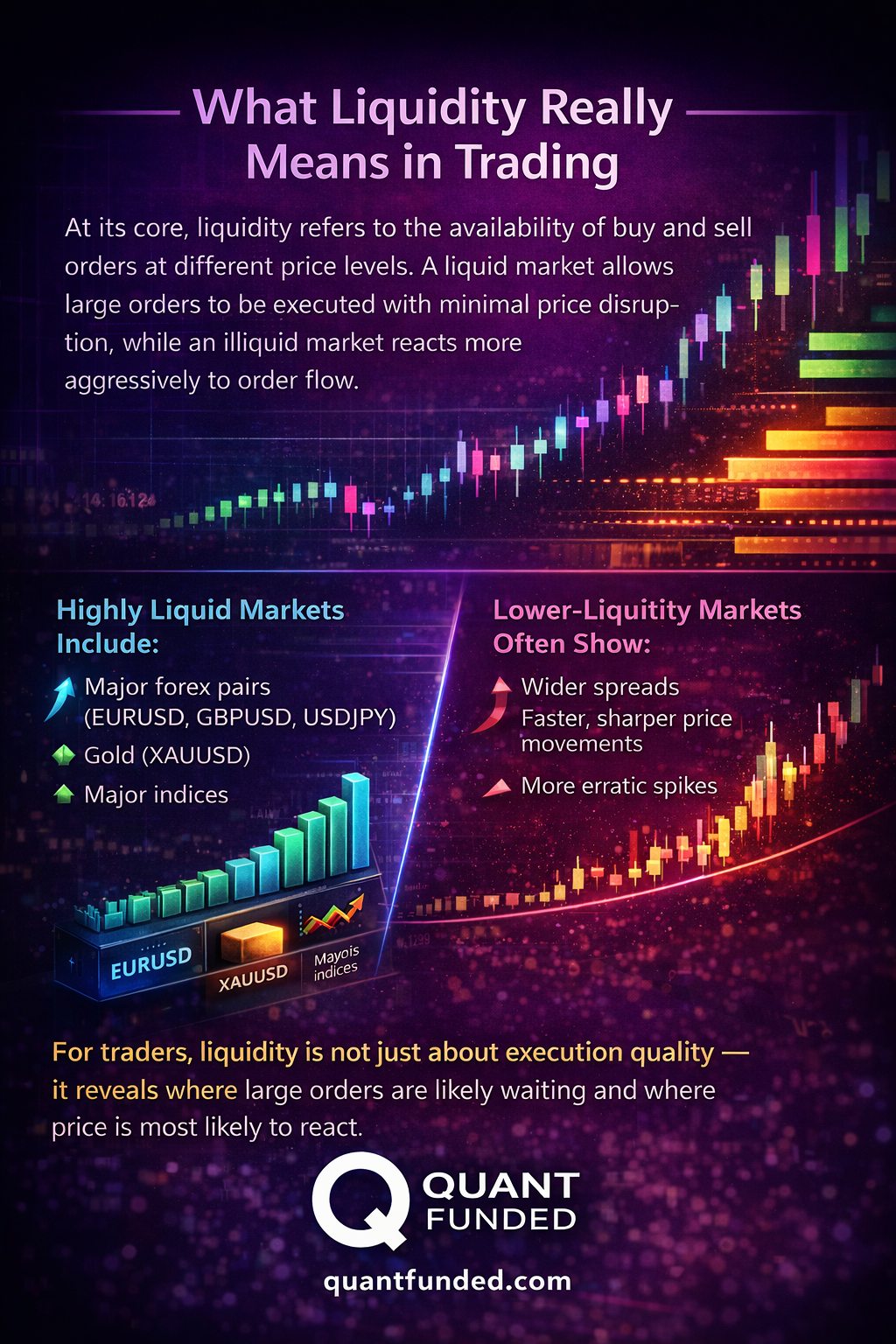
At its core, liquidity refers to the availability of buy and sell orders at different price levels. A liquid market allows large orders to be executed with minimal price disruption, while an illiquid market reacts more aggressively to order flow.
Highly liquid markets include:
-
Major forex pairs (EURUSD, GBPUSD, USDJPY)
-
Gold (XAUUSD)
-
Major indices
Lower-liquidity markets often show:
-
Wider spreads
-
Faster, sharper price movements
-
More erratic spikes
For traders, liquidity is not just about execution quality — it reveals where large orders are likely waiting and where price is most likely to react.
Why Liquidity Drives Price Movement
Price does not move randomly. It moves because orders are executed.
Every significant move in the market is caused by:
-
Large limit orders being filled
-
Stop-loss orders being triggered
-
Aggressive market orders consuming available liquidity
When price approaches an area with a high concentration of orders, the market must respond. That response can take several forms:
-
Rejection
-
Consolidation
-
Strong continuation through the level
Understanding this interaction allows traders to stop guessing and start reading market intent.
The Common Myth About Liquidity Levels
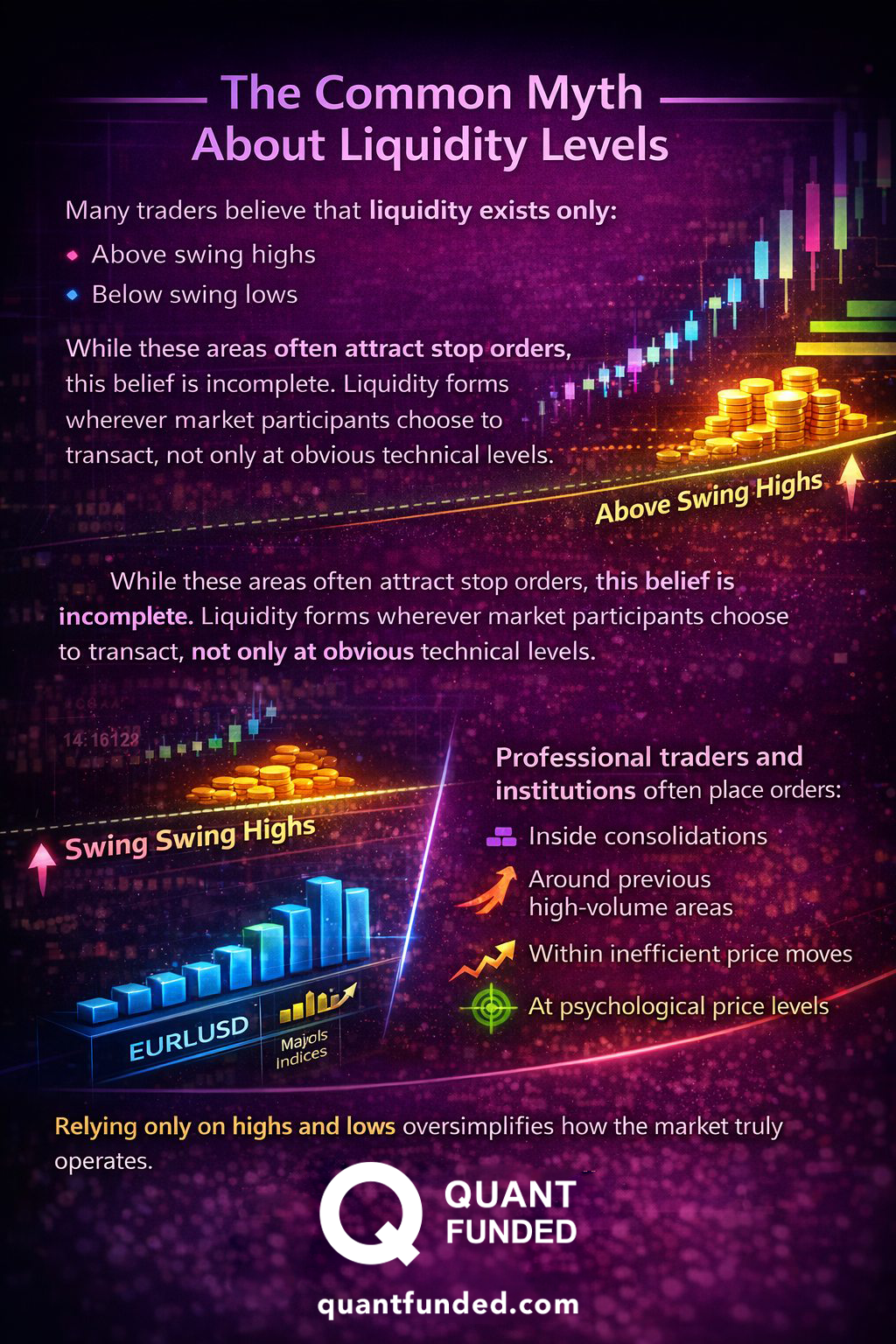
Many traders believe that liquidity exists only:
-
Above swing highs
-
Below swing lows
While these areas often attract stop orders, this belief is incomplete. Liquidity forms wherever market participants choose to transact, not only at obvious technical levels.
Professional traders and institutions often place orders:
-
Inside consolidations
-
Around previous high-volume areas
-
Within inefficient price moves
-
At psychological price levels
Relying only on highs and lows oversimplifies how the market truly operates.
Where Liquidity Actually Forms
Liquidity builds where significant interest accumulates over time. The most common liquidity zones include:
1. Market Structure Turning Points
Areas where price previously shifted direction often attract new orders. Traders remember these levels, and institutions monitor them closely.
2. Consolidation Ranges
When price trades sideways, large quantities of orders build above and below the range. Breakouts from these zones often lead to increased volatility.
3. Imbalance and Inefficiency Zones
Fast, aggressive moves frequently leave behind untested price areas. These zones often act as magnets for future price action.
4. High-Volume Price Levels
Levels that historically traded heavy volume tend to accumulate liquidity again as price revisits them.
5. Psychological Price Levels
Round numbers and key price thresholds naturally attract orders from both retail and institutional participants.
Recognizing these areas gives traders a roadmap of where price is most likely to react.
Liquidity and Prop Trading Evaluations
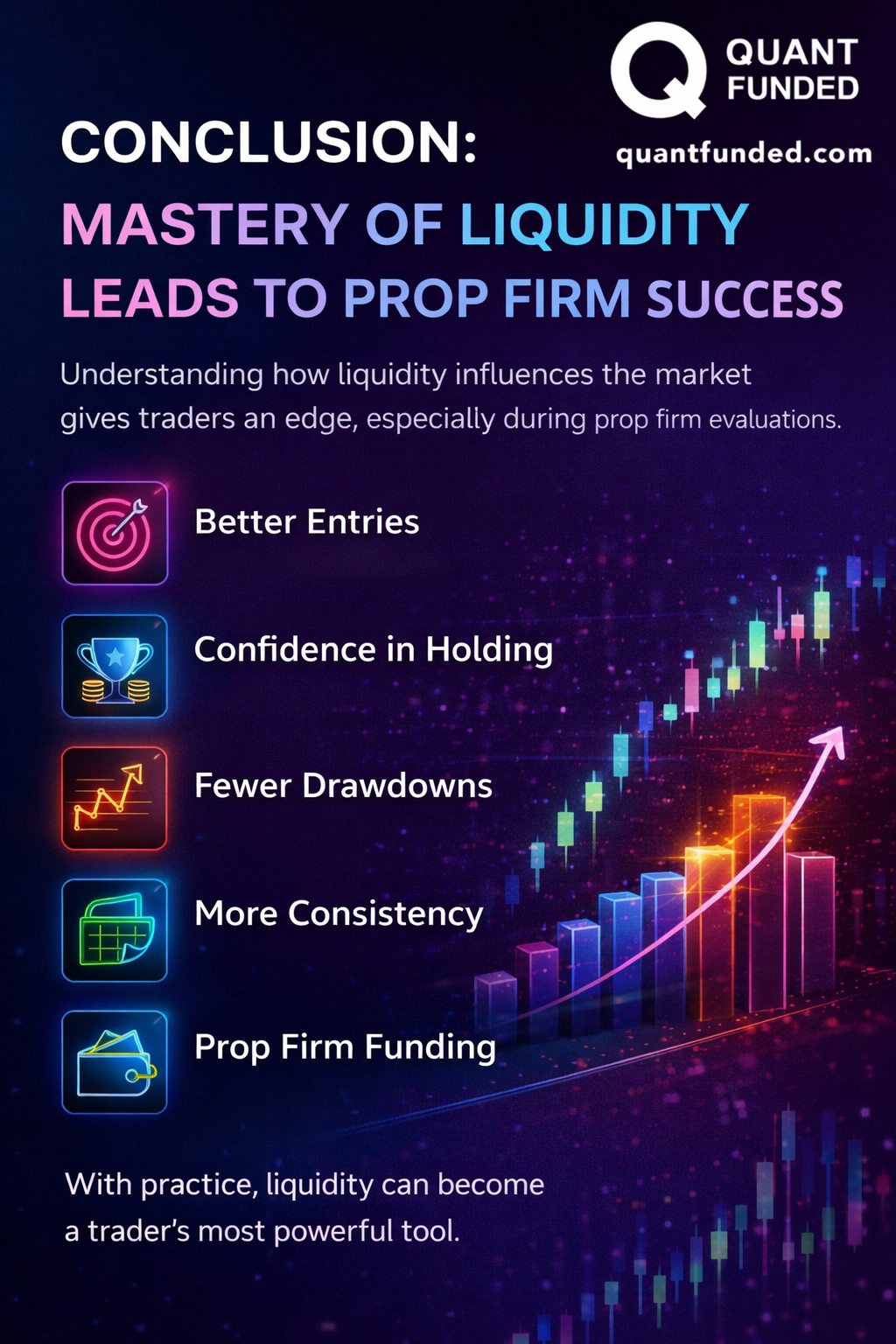
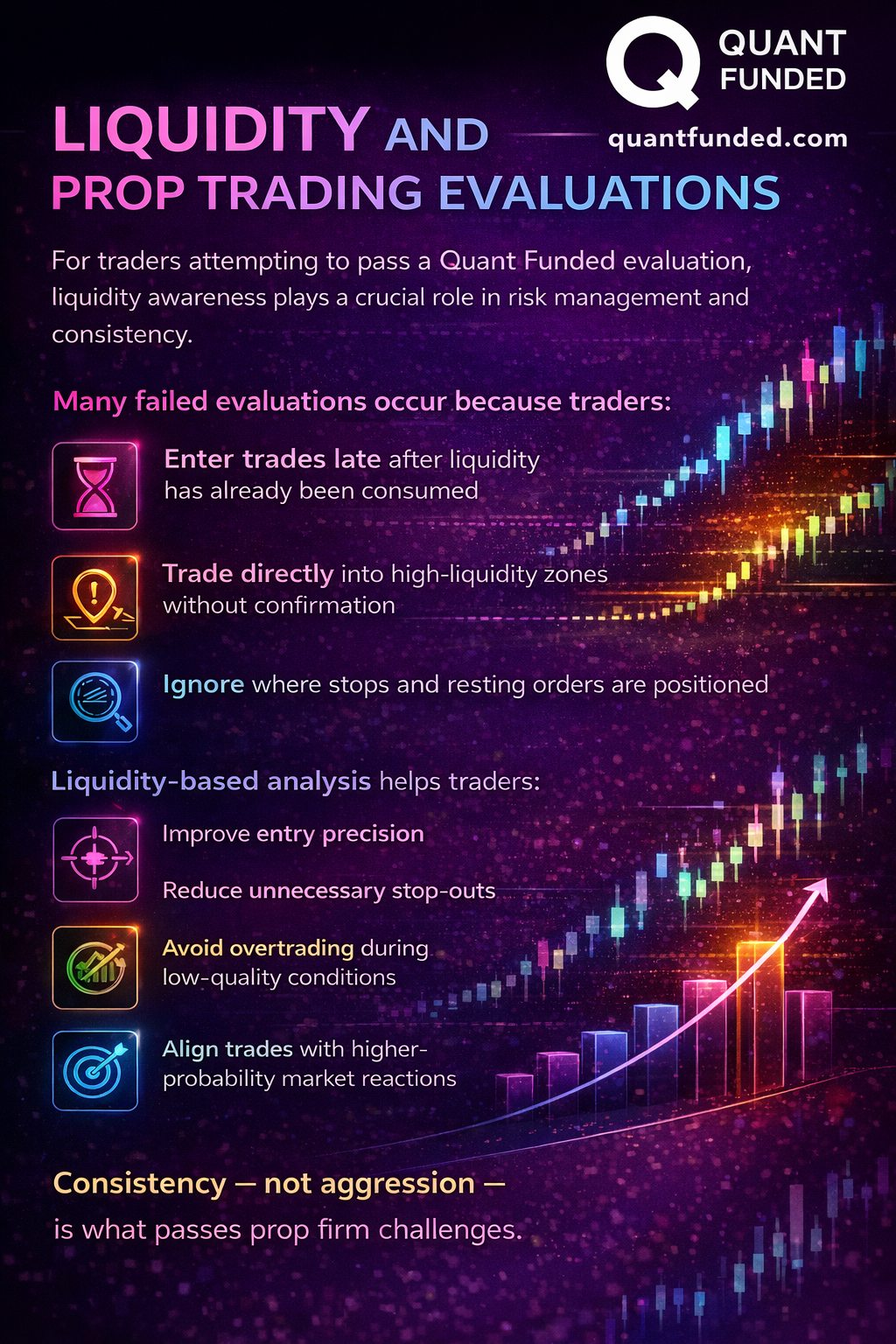
For traders attempting to pass a Quant Funded evaluation, liquidity awareness plays a crucial role in risk management and consistency.
Many failed evaluations occur because traders:
-
Enter trades late after liquidity has already been consumed
-
Trade directly into high-liquidity zones without confirmation
-
Ignore where stops and resting orders are positioned
Liquidity-based analysis helps traders:
-
Improve entry precision
-
Reduce unnecessary stop-outs
-
Avoid overtrading during low-quality conditions
-
Align trades with higher-probability market reactions
Consistency — not aggression — is what passes prop firm challenges.
Tools That Help Traders See Liquidity
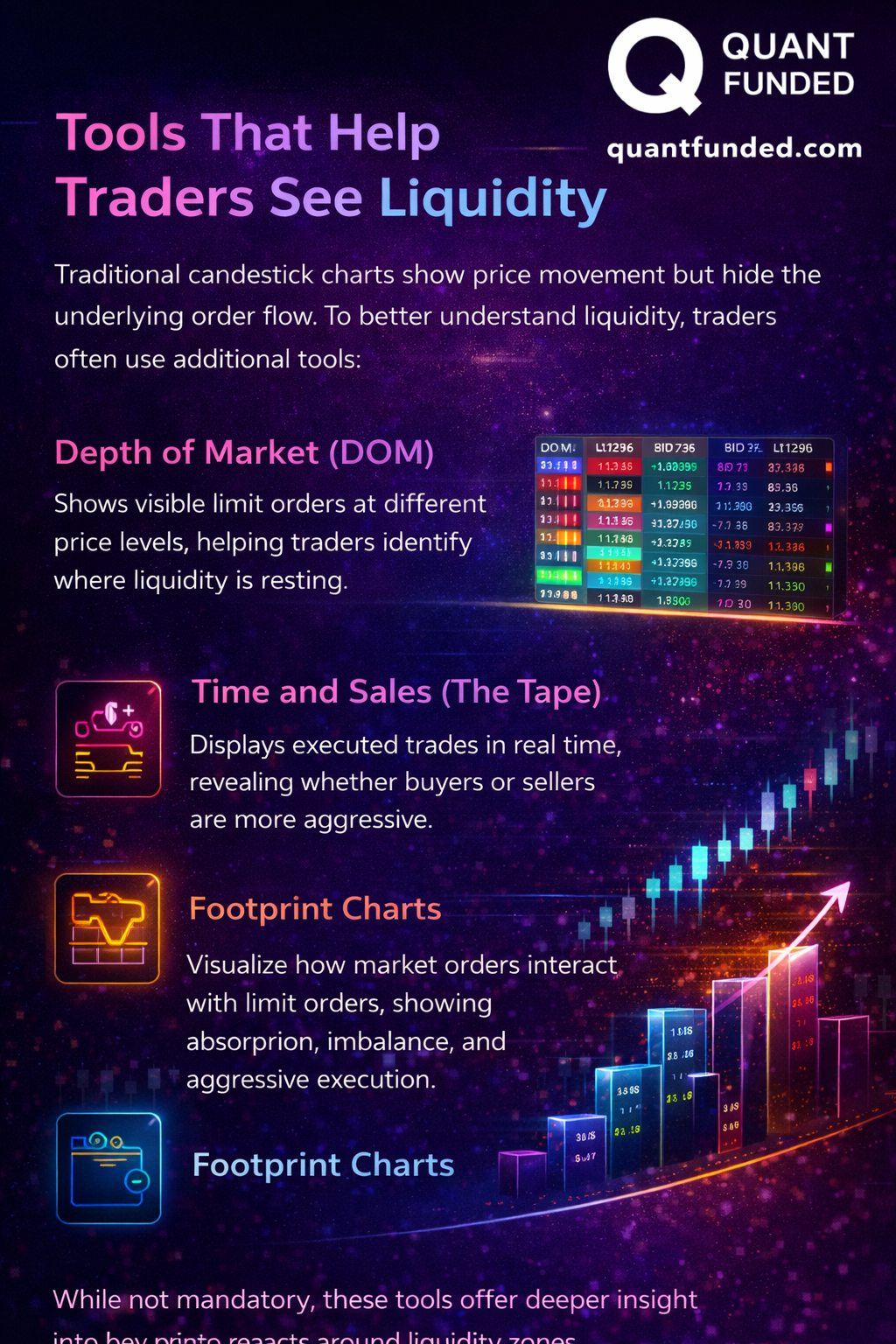
Traditional candlestick charts show price movement but hide the underlying order flow. To better understand liquidity, traders often use additional tools:
Depth of Market (DOM)
Shows visible limit orders at different price levels, helping traders identify where liquidity is resting.
Time and Sales (The Tape)
Displays executed trades in real time, revealing whether buyers or sellers are more aggressive.
Footprint Charts
Visualize how market orders interact with limit orders, showing absorption, imbalance, and aggressive execution.
While not mandatory, these tools offer deeper insight into how price reacts around liquidity zones.
How Liquidity Improves Trade Timing
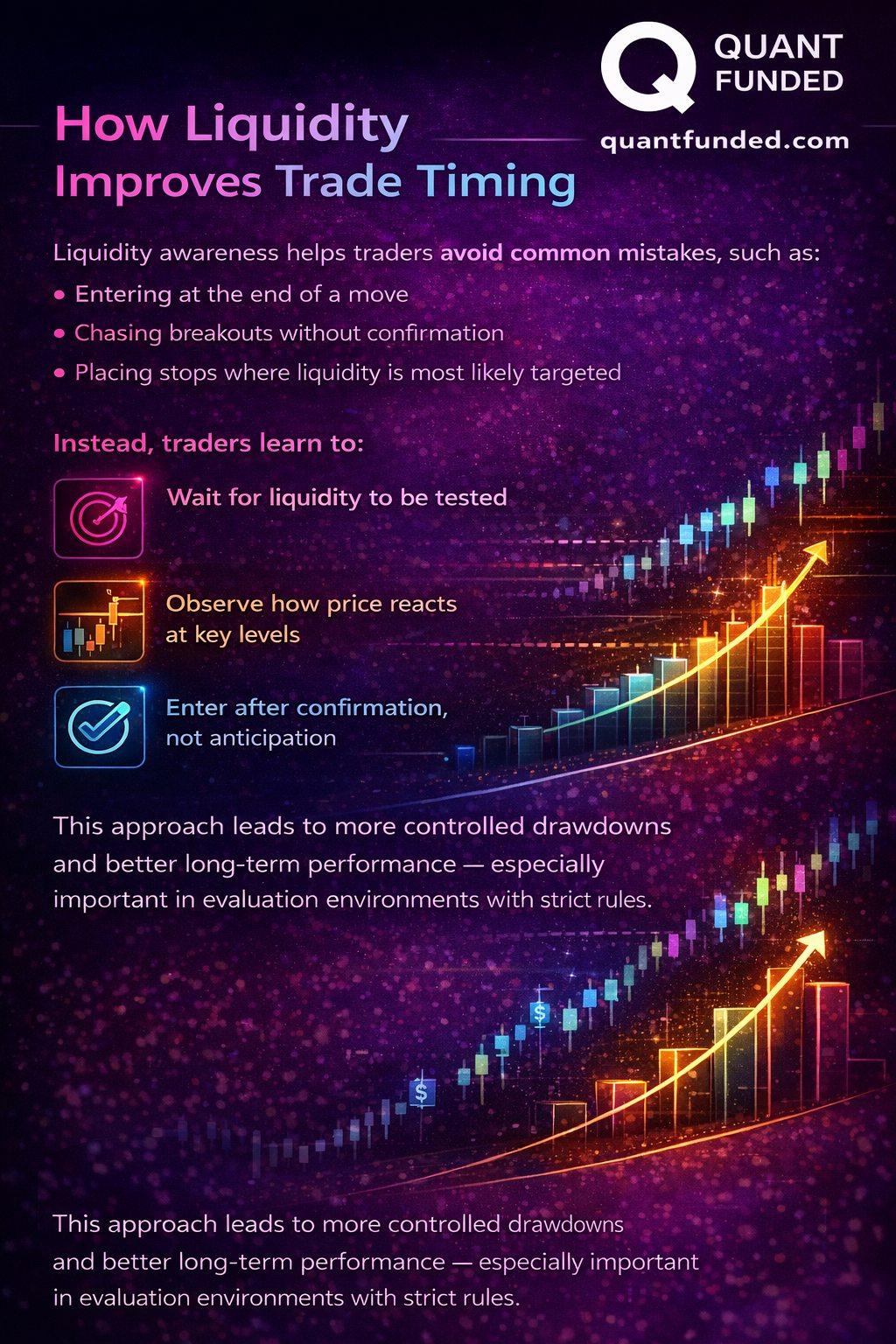
Liquidity awareness helps traders avoid common mistakes, such as:
-
Entering at the end of a move
-
Chasing breakouts without confirmation
-
Placing stops where liquidity is most likely targeted
Instead, traders learn to:
-
Wait for liquidity to be tested
-
Observe how price reacts at key levels
-
Enter after confirmation, not anticipation
This approach leads to more controlled drawdowns and better long-term performance — especially important in evaluation environments with strict rules.
Liquidity vs Indicators
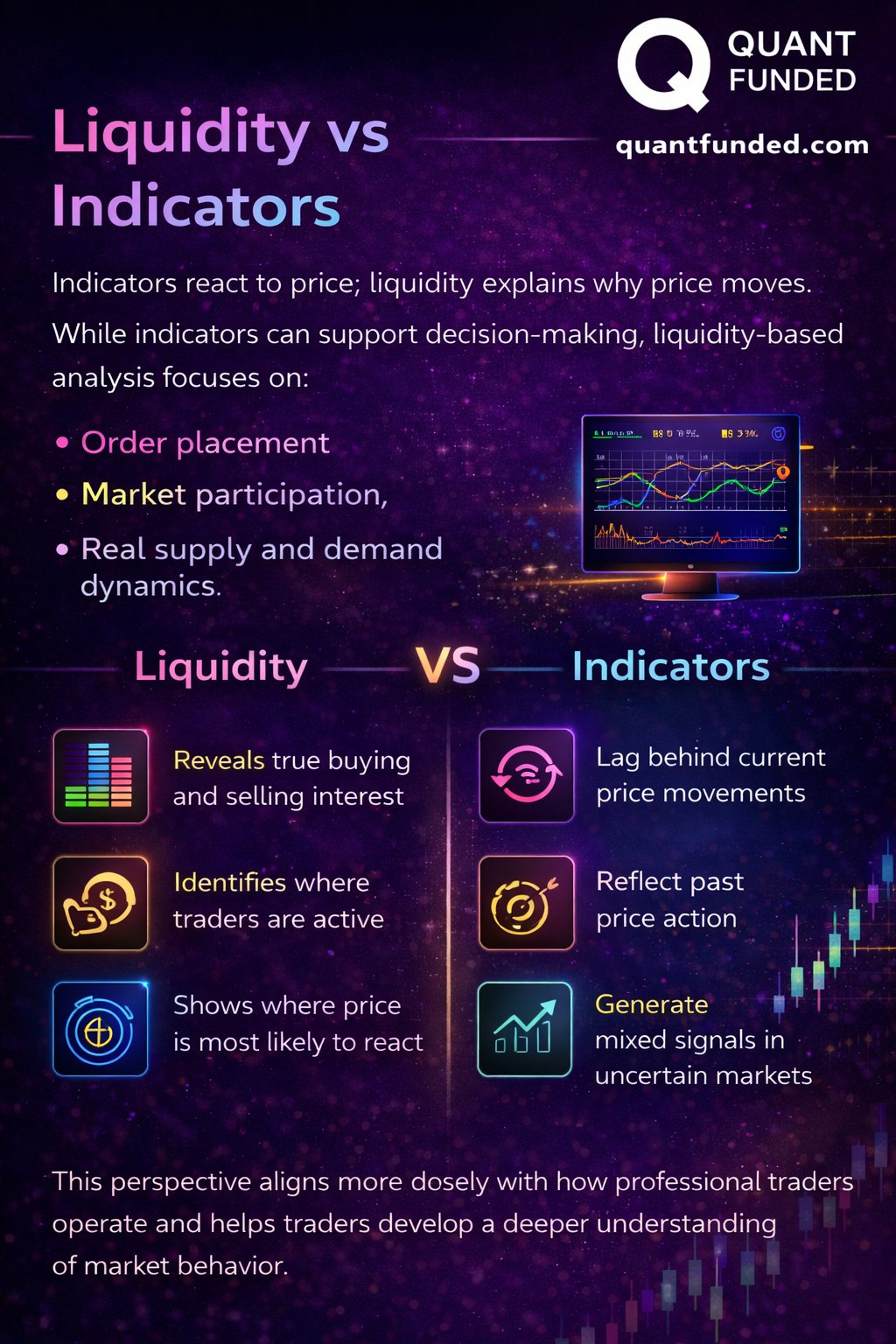
Indicators react to price; liquidity explains why price moves.
While indicators can support decision-making, liquidity-based analysis focuses on:
-
Order placement
-
Market participation
-
Real supply and demand dynamics
This perspective aligns more closely with how professional traders operate and helps traders develop a deeper understanding of market behavior.
Key Takeaways for Quant Funded Traders
-
Liquidity represents real buy and sell orders, not just price movement
-
It exists far beyond swing highs and lows
-
Common liquidity zones include structure points, consolidations, imbalances, volume areas, and psychological levels
-
Understanding liquidity improves entries, confirmations, and risk management
-
Liquidity-based thinking supports consistency — the key to passing prop firm evaluations
Final Thoughts
Markets are driven by orders, not indicators or patterns alone. Traders who understand liquidity stop reacting emotionally and start responding logically to market behavior.
At Quant Funded, the goal is not reckless trading or fast gains — it is controlled execution, disciplined risk management, and consistency over time. Liquidity awareness is one of the most powerful tools traders can develop to achieve that goal.
When traders learn to follow liquidity instead of chasing price, their trading naturally becomes more precise, calmer, and more sustainable.