FOMO in Trading: The Silent Account Killer in Prop Firm Challenges
Introduction: Why FOMO Is the #1 Reason Traders Fail Challenges
Passing a prop firm challenge is not just about having a profitable strategy—it’s about controlling your emotions under pressure. One of the biggest psychological traps traders fall into is FOMO (Fear of Missing Out).
FOMO in trading causes impulsive decisions, overtrading, and unnecessary risk-taking—all of which directly lead to failed evaluations.
At Quant Funded, we see it every day: traders who have the skill to pass, but fail because they cannot control their emotions.
If you want to pass a Quant Funded Challenge, understanding and eliminating FOMO is non-negotiable.
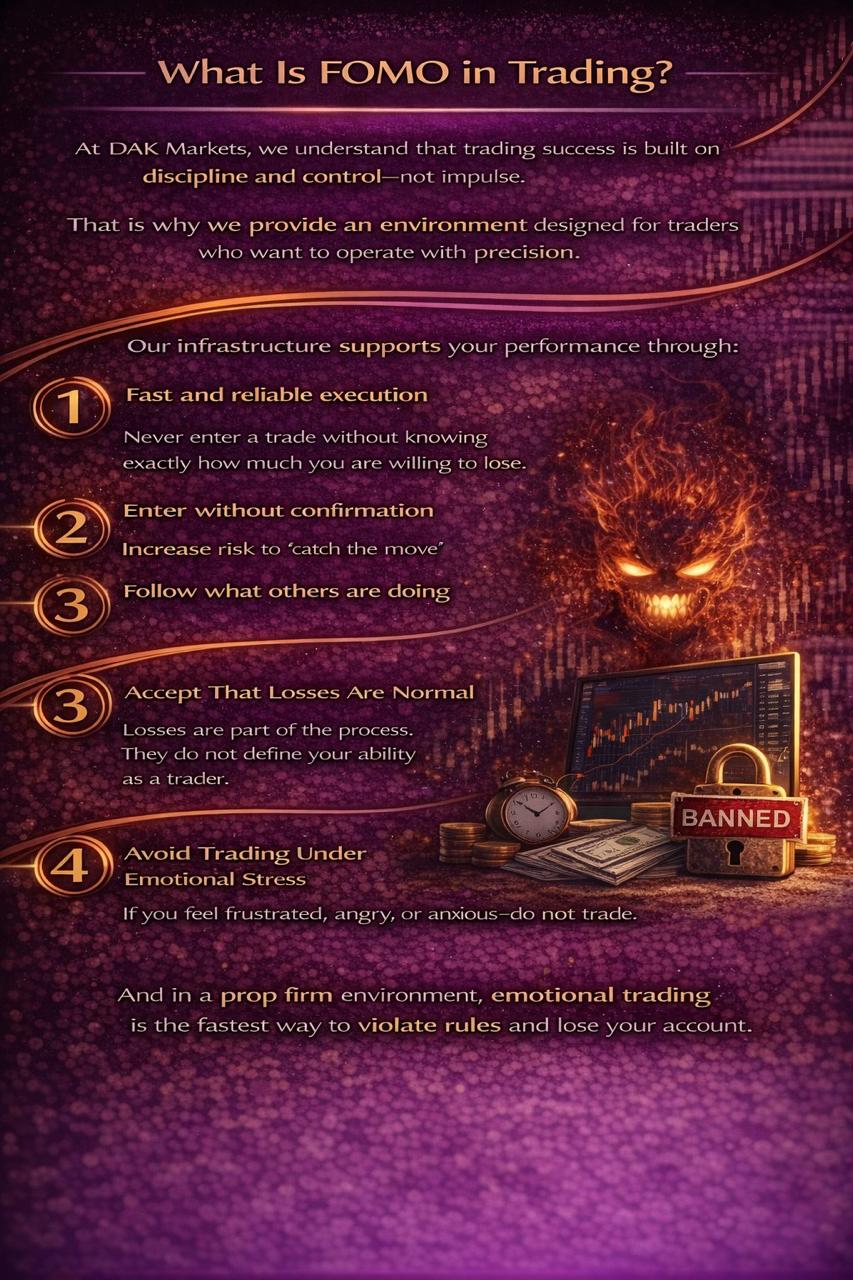
What Is FOMO in Trading?
FOMO (Fear of Missing Out) is the emotional urge to enter a trade because you believe you’re missing a profitable move.
Instead of waiting for your setup, you:
- Jump into trades late
- Enter without confirmation
- Increase risk to “catch the move”
- Follow what others are doing
This behavior is driven by emotion—not logic.
And in a prop firm environment, emotional trading is the fastest way to violate rules and lose your account.
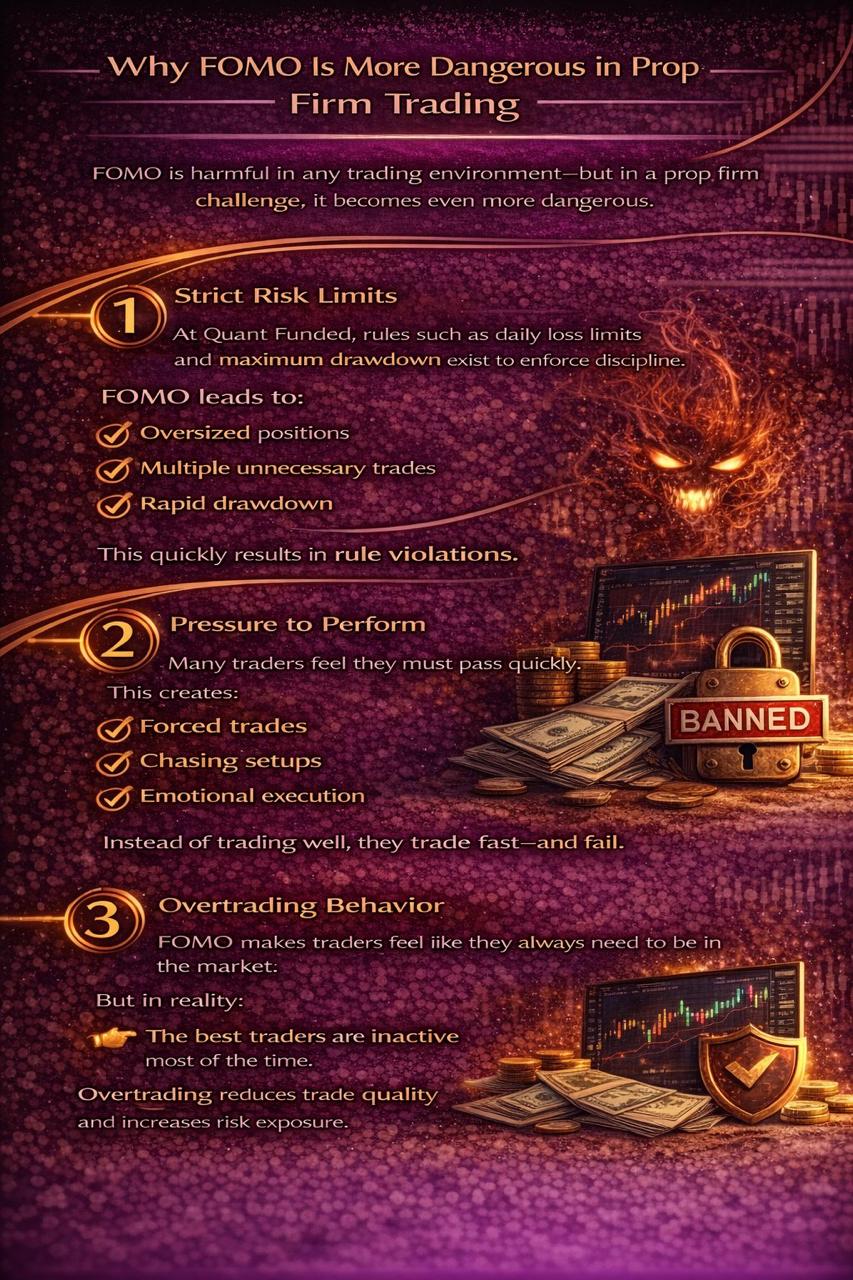
Why FOMO Is More Dangerous in Prop Firm Trading
FOMO is harmful in any trading environment—but in a prop firm challenge, it becomes even more dangerous.
1. Strict Risk Limits
At Quant Funded, rules such as daily loss limits and maximum drawdown exist to enforce discipline.
FOMO leads to:
- Oversized positions
- Multiple unnecessary trades
- Rapid drawdown
This quickly results in rule violations.
2. Pressure to Perform
Many traders feel they must pass quickly.
This creates:
- Forced trades
- Chasing setups
- Emotional execution
Instead of trading well, they trade fast—and fail.
3. Overtrading Behavior
FOMO makes traders feel like they always need to be in the market.
But in reality:
👉 The best traders are inactive most of the time.
Overtrading reduces trade quality and increases risk exposure.
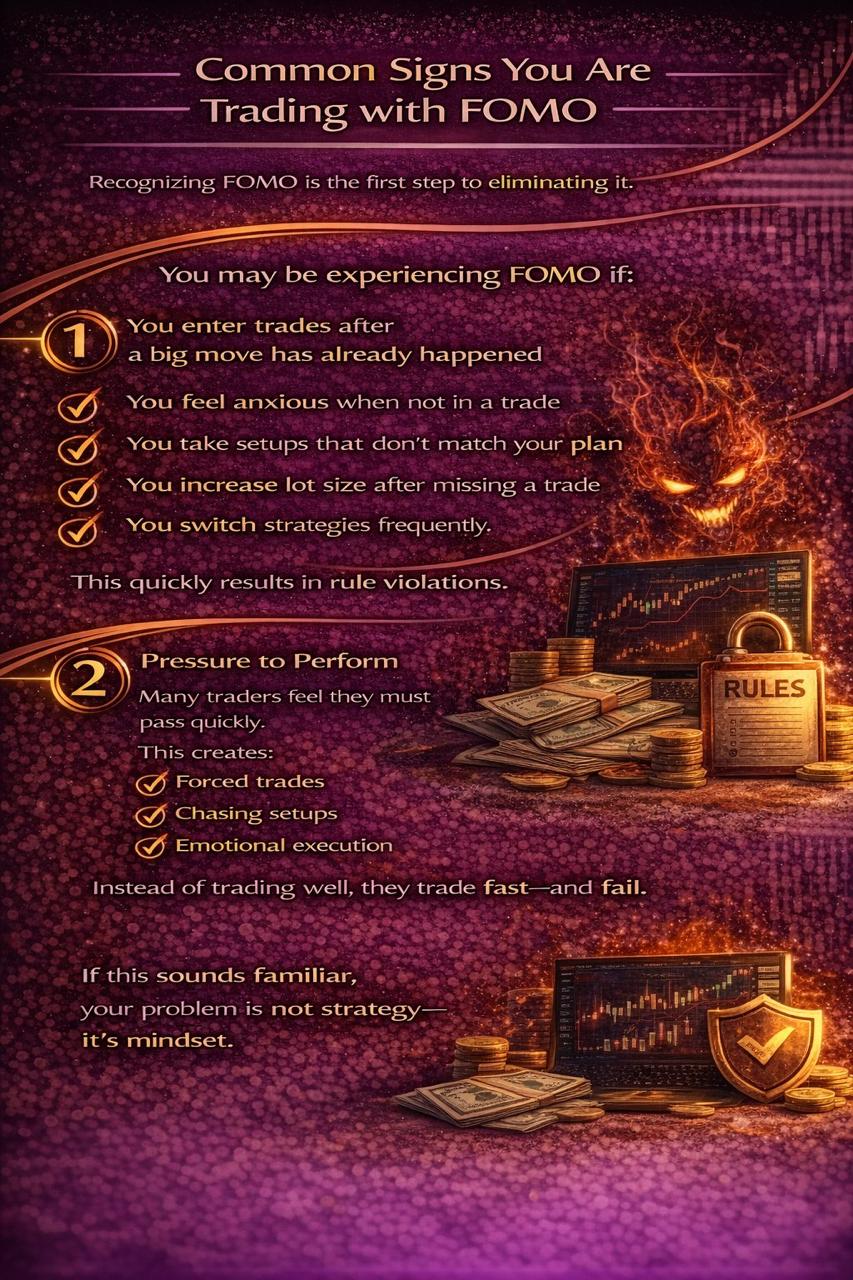
Common Signs You Are Trading with FOMO
Recognizing FOMO is the first step to eliminating it.
You may be experiencing FOMO if:
- You enter trades after a big move has already happened
- You feel anxious when not in a trade
- You take setups that don’t match your plan
- You increase lot size after missing a trade
- You switch strategies frequently
If this sounds familiar, your problem is not strategy—it’s mindset.
How FOMO Leads to Challenge Failure
Let’s break down the typical cycle:
- You see a strong move
- You feel like you’re missing out
- You enter late
- Price retraces
- You take a loss
- You try to recover quickly
- You take another impulsive trade
- You hit your drawdown limit
👉 Challenge failed.
This is not a rare scenario—it is one of the most common patterns we observe.
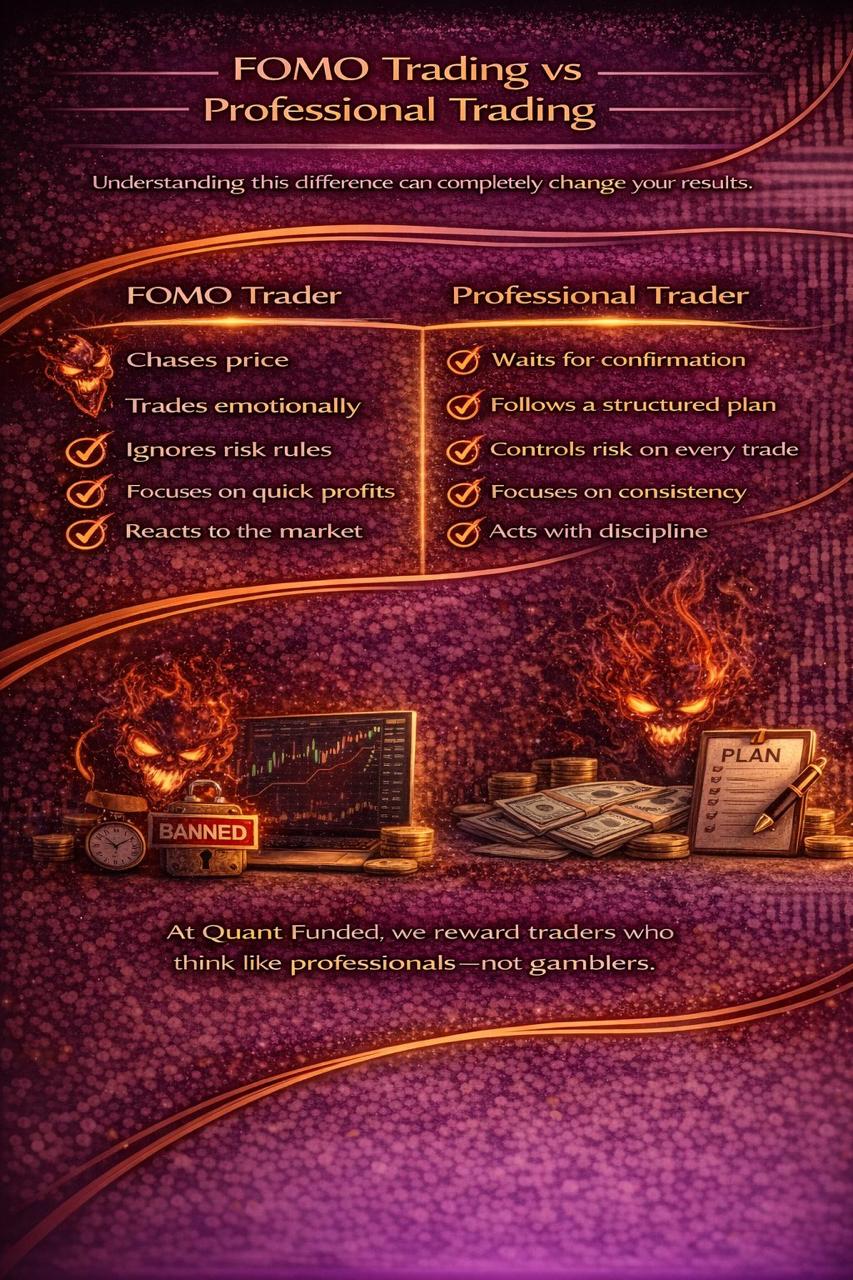
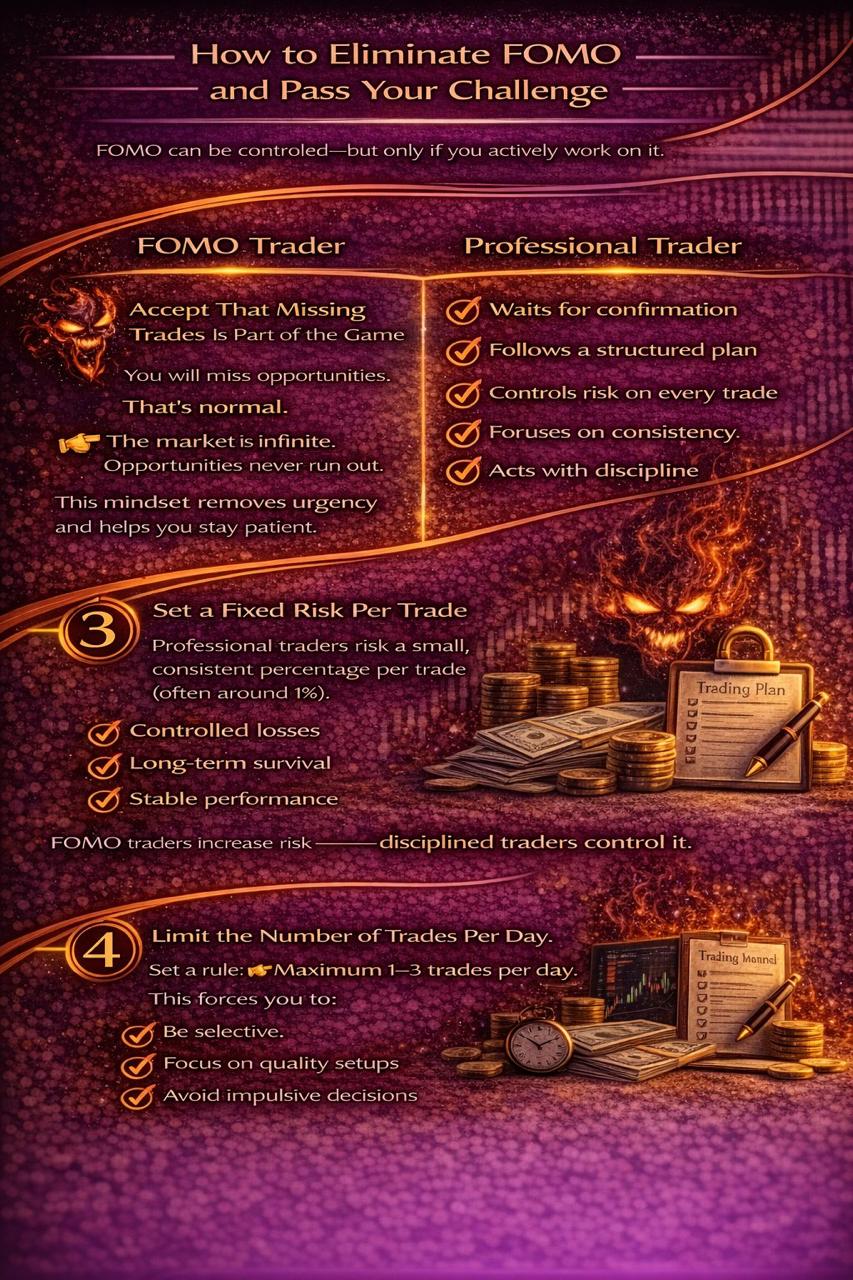
FOMO Trading vs Professional Trading
Understanding this difference can completely change your results.
FOMO Trader:
- Chases price
- Trades emotionally
- Ignores risk rules
- Focuses on quick profits
- Reacts to the market
Professional Trader:
- Waits for confirmation
- Follows a structured plan
- Controls risk on every trade
- Focuses on consistency
- Acts with discipline
At Quant Funded, we reward traders who think like professionals—not gamblers.
How to Eliminate FOMO and Pass Your Challenge
FOMO can be controlled—but only if you actively work on it.
1. Accept That Missing Trades Is Part of the Game
You will miss opportunities.
That’s normal.
👉 The market is infinite. Opportunities never run out.
This mindset removes urgency and helps you stay patient.
2. Trade Only Your System
Before entering any trade, ask:
- Does this meet my criteria?
- Is my risk defined?
- Is this part of my strategy?
If the answer is no—you do not take the trade.
3. Set a Fixed Risk Per Trade
Professional traders risk a small, consistent percentage per trade (often around 1%).
This ensures:
- Controlled losses
- Long-term survival
- Stable performance
FOMO traders increase risk—disciplined traders control it.
4. Limit the Number of Trades Per Day
Set a rule:
👉 Maximum 1–3 trades per day.
This forces you to:
- Be selective
- Focus on quality setups
- Avoid impulsive decisions
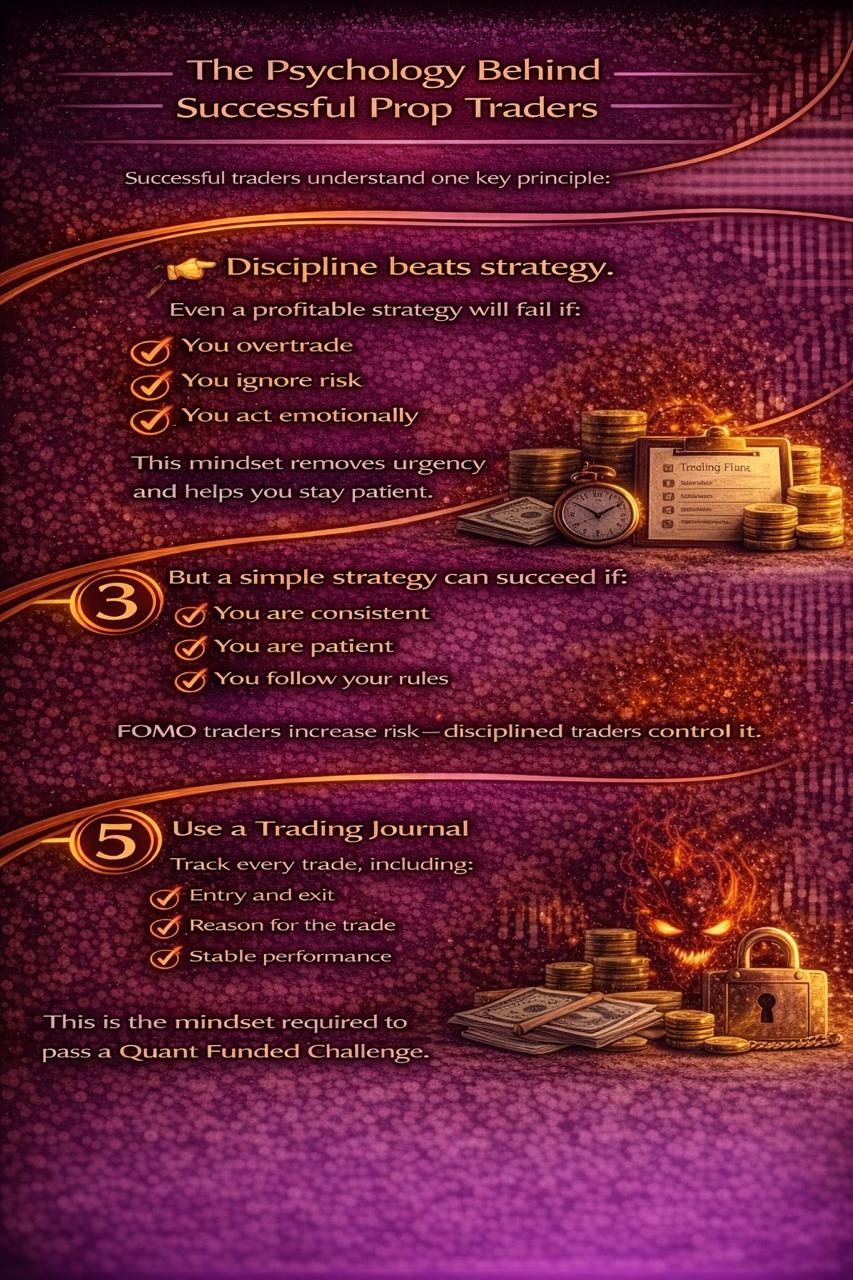
5. Use a Trading Journal
Track every trade, including:
- Entry and exit
- Reason for the trade
- Emotional state
Over time, you will see exactly how FOMO impacts your performance.
6. Focus on Execution, Not Profits
Your goal is not to make money on every trade.
Your goal is to:
👉 Execute your edge consistently.
If you follow your plan, profits will follow.
7. Slow Down Your Decision-Making
FOMO thrives on urgency.
Create a rule:
👉 Wait 1–2 minutes before entering any trade.
This simple habit filters out impulsive decisions.
The Psychology Behind Successful Prop Traders
Successful traders understand one key principle:
👉 Discipline beats strategy.
Even a profitable strategy will fail if:
- You overtrade
- You ignore risk
- You act emotionally
But a simple strategy can succeed if:
- You are consistent
- You are patient
- You follow your rules
This is the mindset required to pass a Quant Funded Challenge.
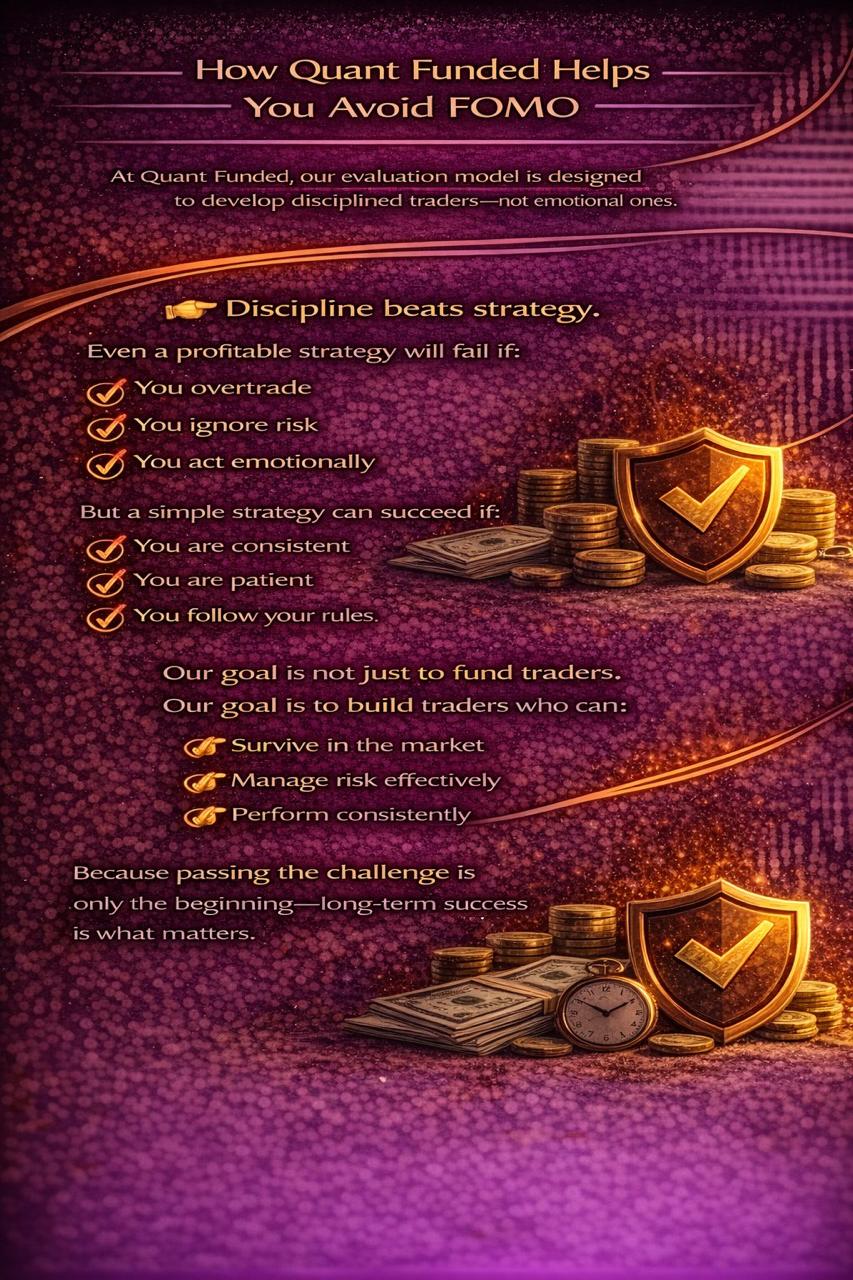
How Quant Funded Helps You Avoid FOMO
At Quant Funded, our evaluation model is designed to develop disciplined traders—not emotional ones.
We emphasize:
- Strict risk management rules
- Structured progression through phases
- Consistency over short-term performance
- Long-term trading behavior
Our goal is not just to fund traders.
Our goal is to build traders who can:
👉 Survive in the market
👉 Manage risk effectively
👉 Perform consistently
Because passing the challenge is only the beginning—long-term success is what matters.
Conclusion: Control Your Emotions, Control Your Results
FOMO is one of the biggest obstacles in trading—but it is also one of the most controllable.
If you can eliminate FOMO:
- Your trade quality improves
- Your risk stays controlled
- Your consistency increases
And most importantly:
👉 Your chances of passing the Quant Funded Challenge rise significantly.
Remember:
- You don’t need every trade
- You don’t need constant action
- You don’t need to rush
👉 You need discipline.
Because in trading, success doesn’t come from doing more.
It comes from doing less—better.