Can You Day Trade for a Living With $1,000? The Honest Truth Most Traders Ignore
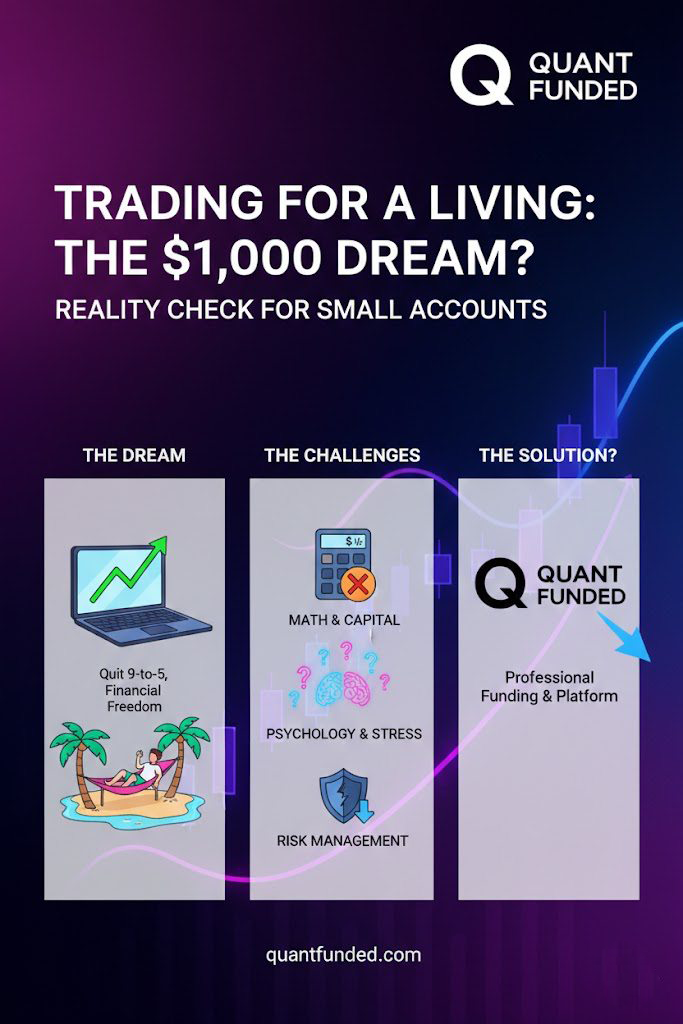
For many aspiring traders, the dream is simple: quit the 9-to-5, trade the markets, and earn a consistent income from anywhere in the world. A common question appears again and again:
“Can I realistically day trade for a living with $1,000?”
The short answer is no—and not because trading is impossible, but because math, psychology, and risk management work against small accounts in ways most beginners underestimate.
In this article, we’ll break down the real numbers, the psychological pressure, and the structural disadvantages of trading small capital—and explain why professional prop trading models like Quant Funded exist in the first place.
The Appeal of Starting Small
The idea of starting with $500 or $1,000 feels attractive for obvious reasons:
- Low financial risk
- Easy broker access
- High leverage availability
- Social media success stories
But trading success is not about starting cheap—it’s about surviving long enough to compound.
And this is where most traders fail.
The Mathematical Reality of a $1,000 Trading Account
Let’s assume a disciplined trader—not a gambler.
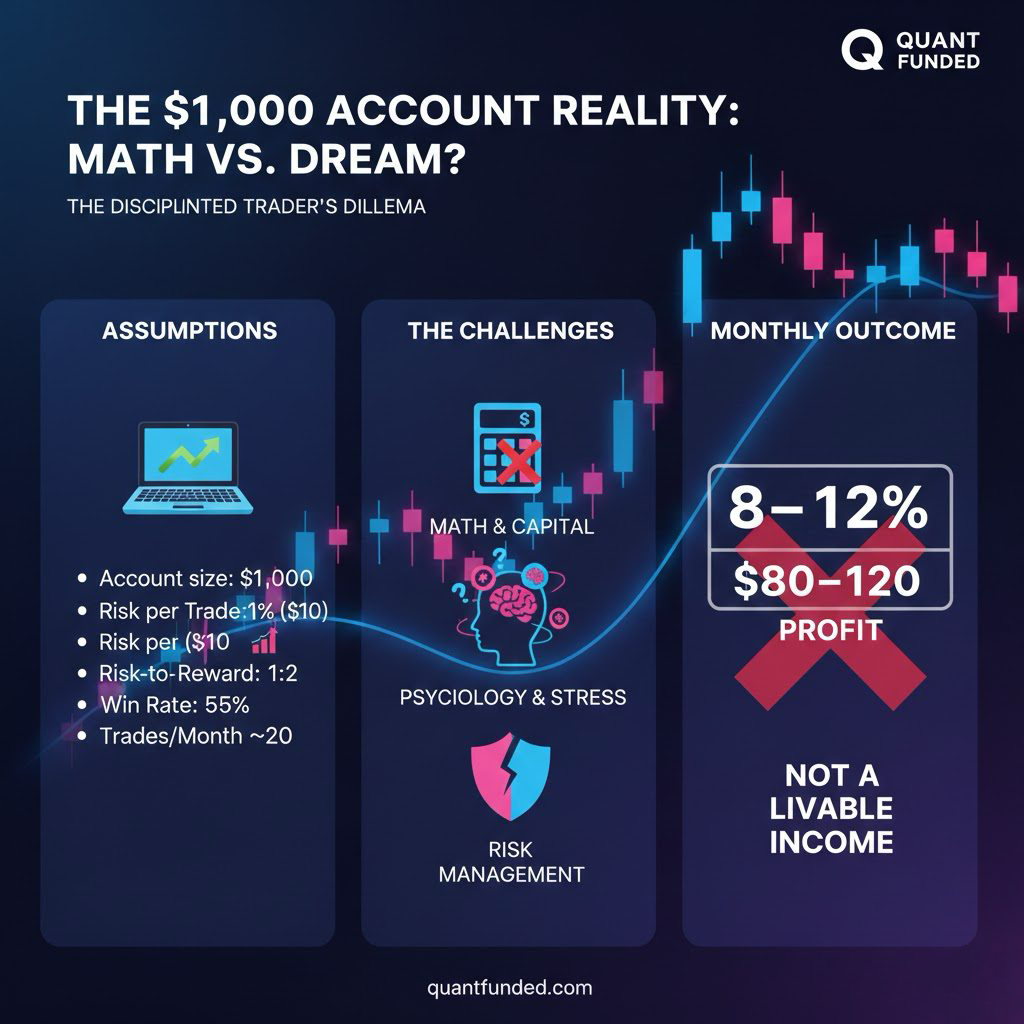
- Account size: $1,000
- Risk per trade: 1% ($10)
- Risk-to-reward ratio: 1:2
- Win rate: 55%
- Trades per month: ~20
Even under these very optimistic assumptions, the average monthly return is roughly 8–12%.
That’s $80–$120 per month.
Even if you outperform and average 10% consistently, that’s $100 per month.
👉 That is not a livable income in any developed country.
Compounding Sounds Great—Until You Need to Eat
“Yes, but compounding will make it grow!”
True—but only if you never withdraw.
To grow $1,000 into $10,000 at 10% monthly returns, you need roughly 24 months of uninterrupted compounding.
During those two years:
- No rent payments
- No withdrawals
- No financial emergencies
- No emotional pressure
For most people, that’s simply unrealistic.
Why Small Accounts Destroy Trading Psychology
This is where things get dangerous.
When traders realize they can’t make enough, they start:
- Increasing lot size
- Over-leveraging
- Ignoring stop losses
- Forcing trades
- Chasing losses
Risk management collapses—not because traders don’t understand it, but because the rewards feel meaningless.
Risking $10 to make $20 doesn’t feel worth the emotional effort.
But risking $2,000 to make $6,000?
Suddenly discipline becomes easy.
The Hidden Problem: Pressure
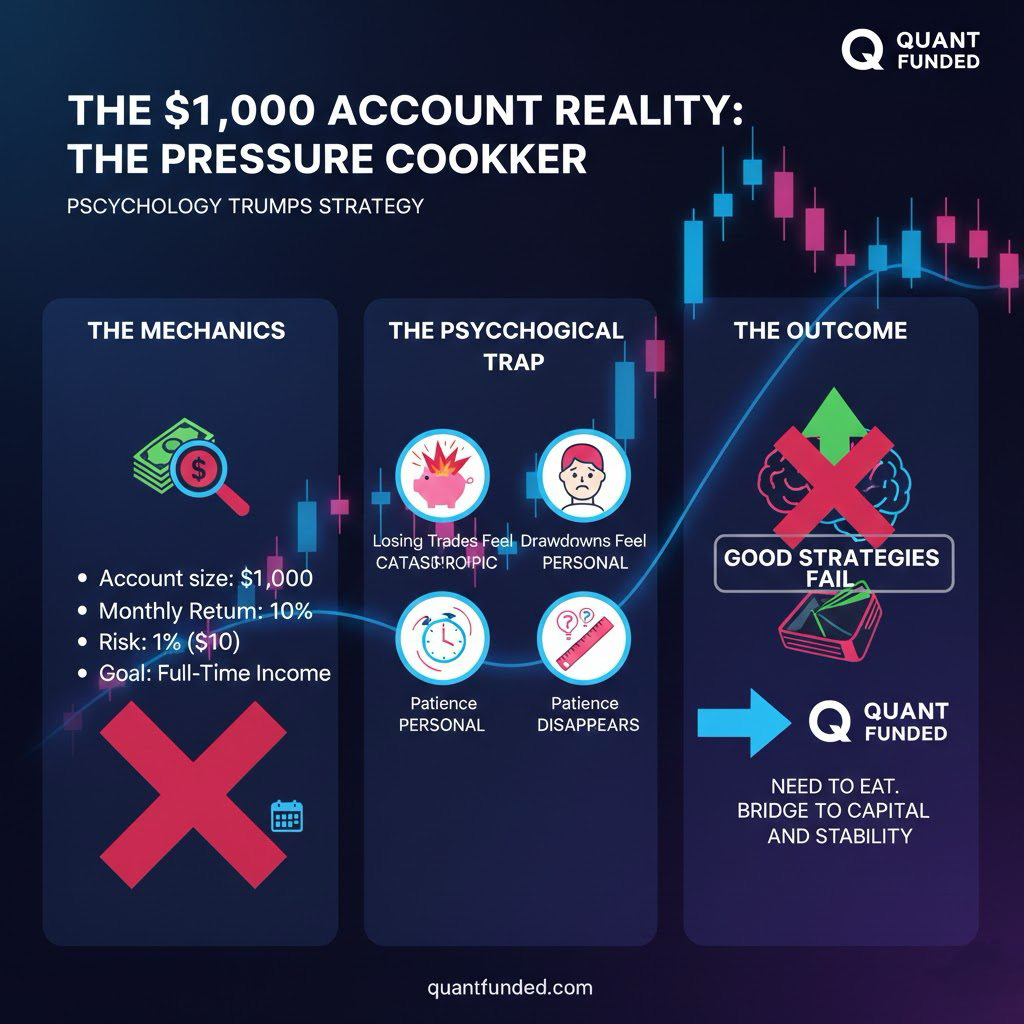
Small accounts create constant psychological pressure:
- Every losing trade feels catastrophic
- Drawdowns feel personal
- Patience disappears
- Rules bend
Even good strategies fail under stress.
This is why most retail traders blow accounts not from bad strategies—but from bad execution under pressure.
Why “High Monthly Returns” Are a Trap
Let’s be brutally honest.
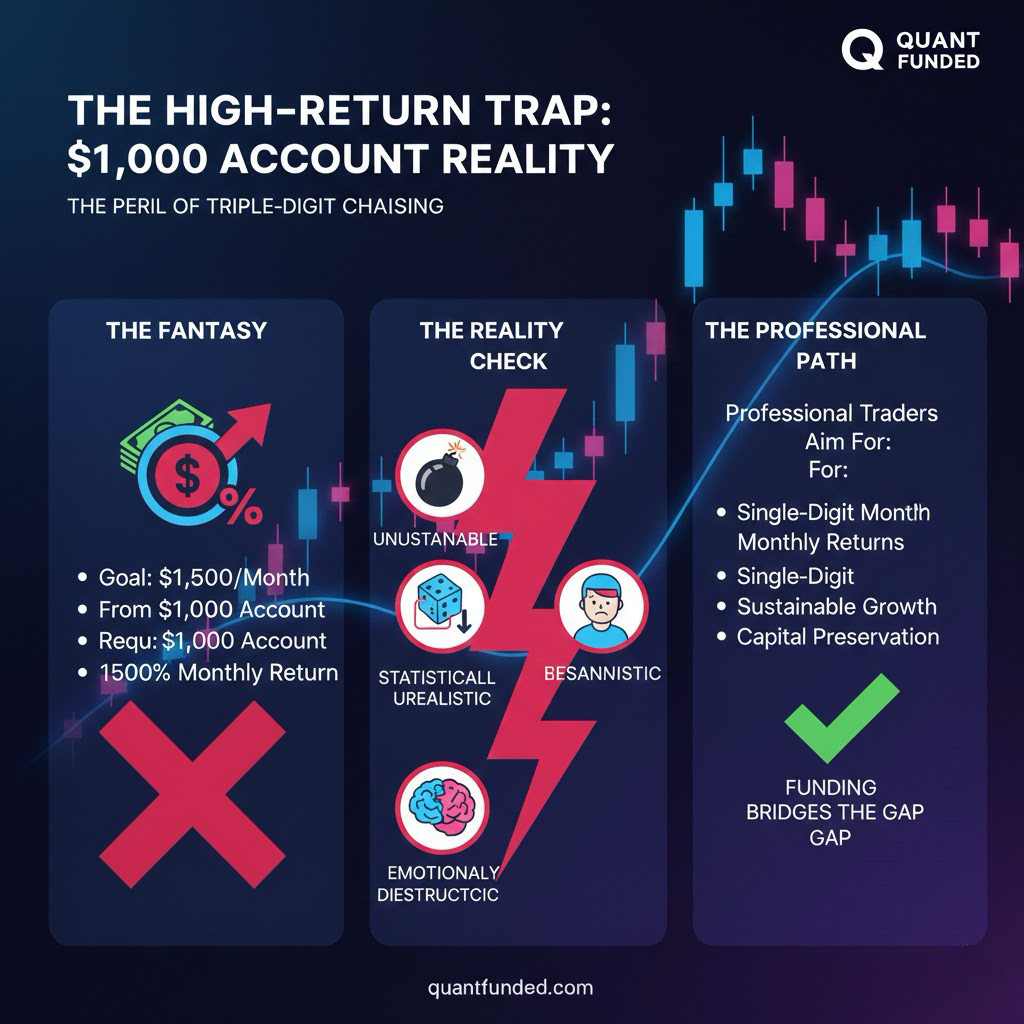
To make $1,500 per month from a $1,000 account, you need a 150% monthly return.
That is:
- Unsustainable
- Statistically unrealistic
- Emotionally destructive
Any system promising this is not trading—it’s gambling.
Professional traders aim for single-digit monthly returns, not triple-digit miracles.
Capital Matters More Than Strategy
One of the most uncomfortable truths in trading is this:
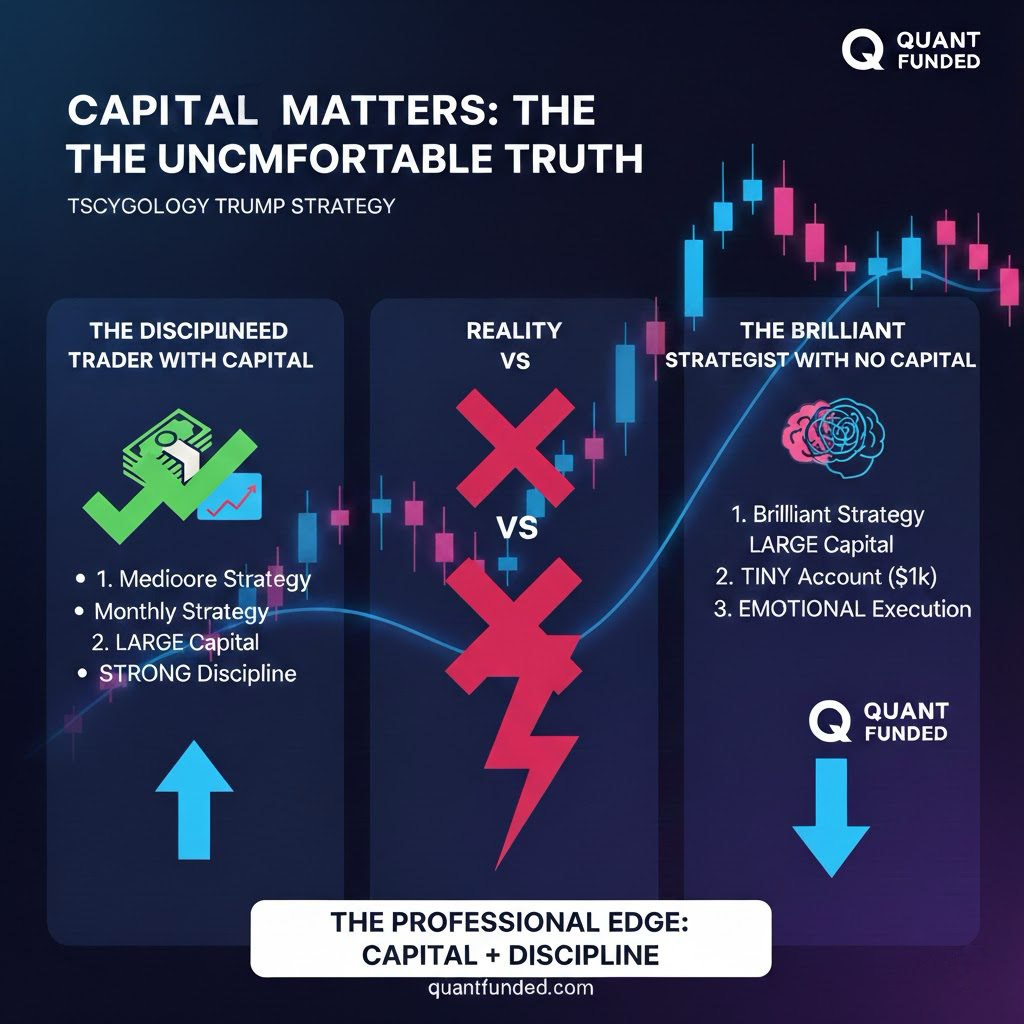
Capital size matters more than entry precision.
A trader with:
- A mediocre strategy
- Large capital
- Strong discipline
Will outperform:
- A brilliant strategist
- Tiny account
- Emotional execution
This is why institutions, funds, and prop firms exist.
The Professional Alternative: Prop Trading
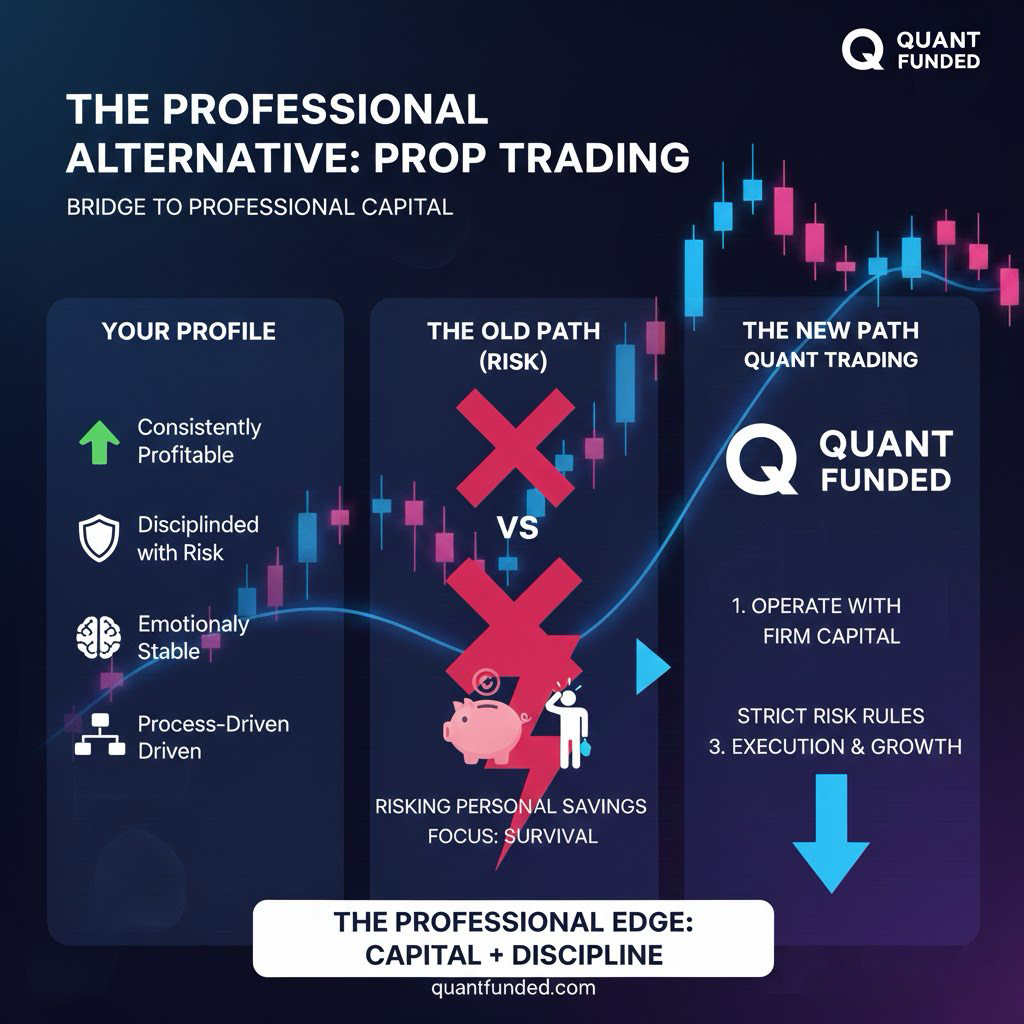
If you are:
- Consistently profitable
- Disciplined with risk
- Emotionally stable
- Process-driven
But lack capital, proprietary trading offers a logical path forward.
Instead of risking personal savings, traders operate under strict risk rules, focusing on execution—not survival.
This is where Quant Funded comes in.
Why Prop Firms Change the Game
With a professionally structured funded account:
- Risk stays proportional
- Psychology improves
- Returns scale meaningfully
- Discipline becomes easier
For example:
- 5% on $100,000 = $5,000
- 5% on $1,000 = $50
Same skill. Same strategy. Radically different outcome.
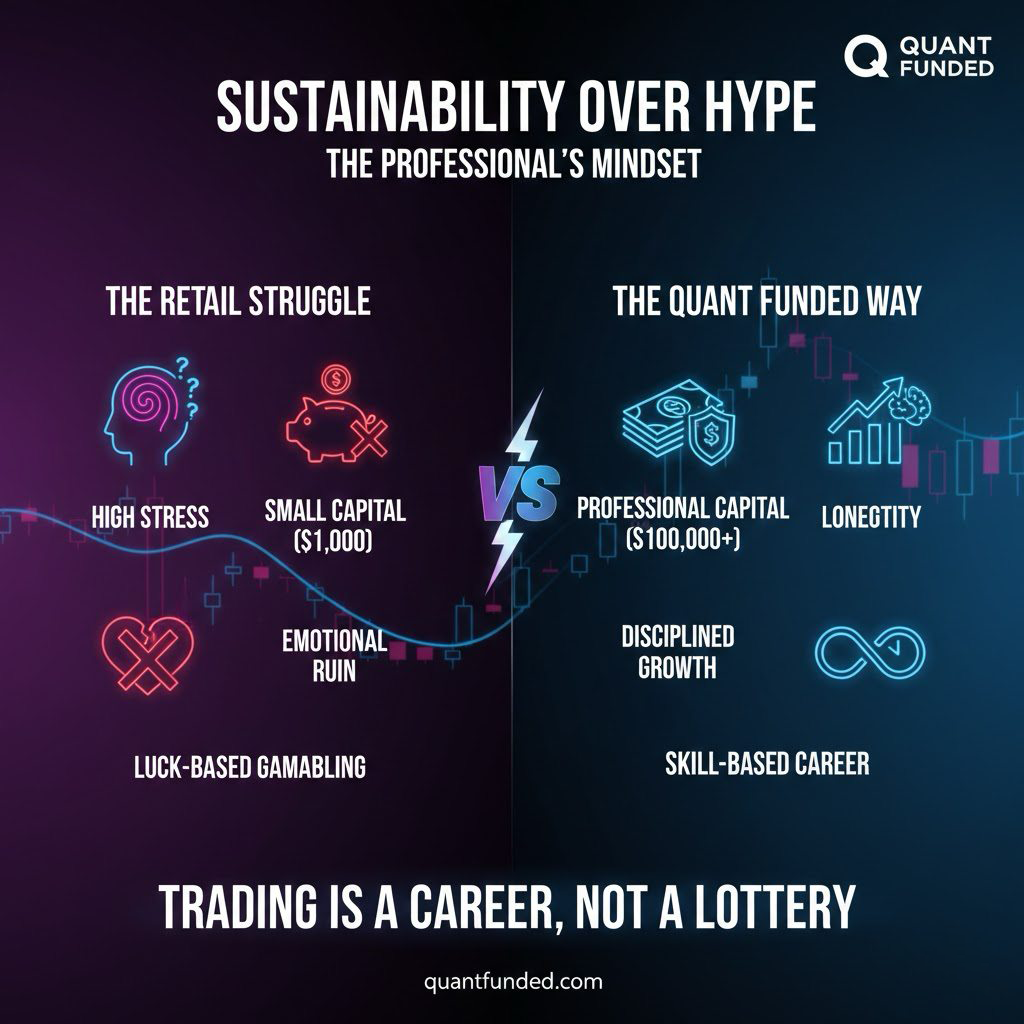
Sustainability Over Hype
At Quant Funded, we believe:
- Trading is a career, not a lottery
- Longevity beats aggression
- Risk management is non-negotiable
- Capital efficiency is key
Our model exists because most traders don’t fail from lack of talent—but from lack of capital and structure.
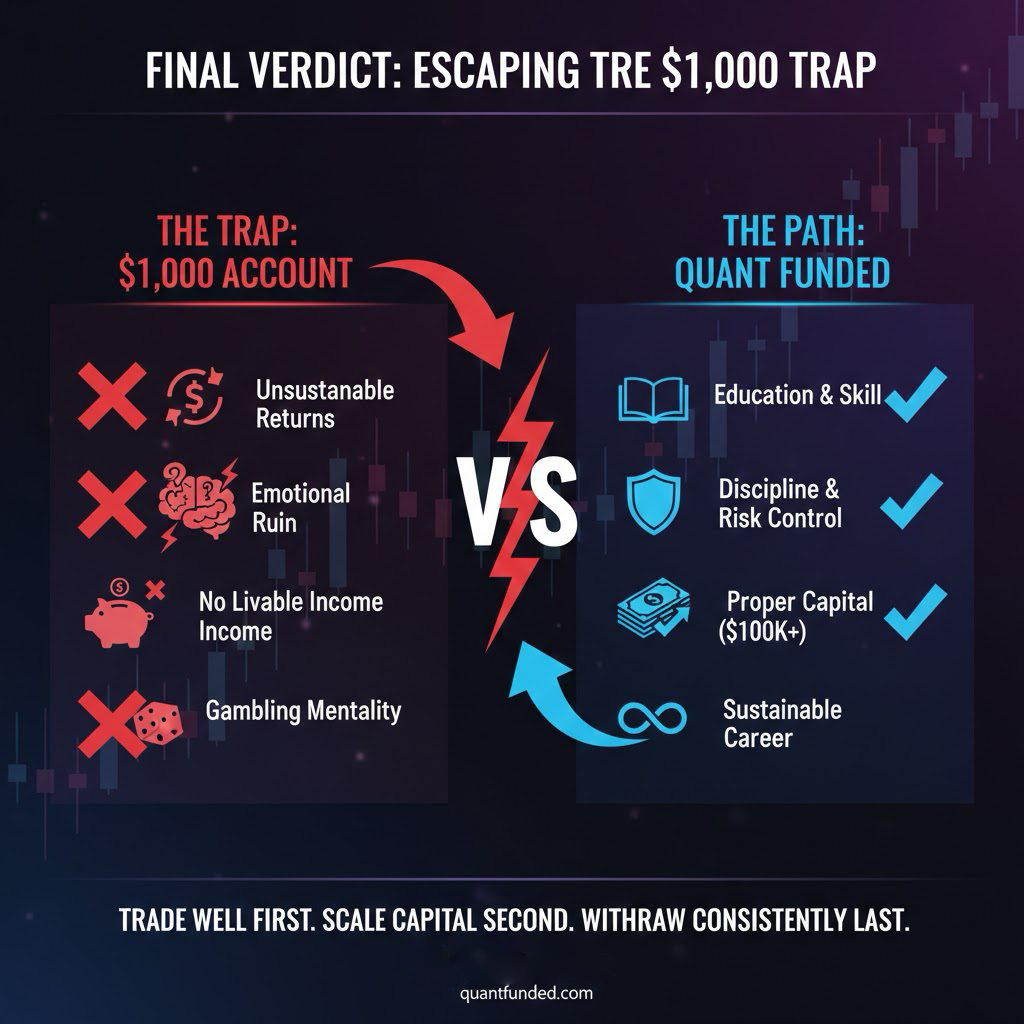
Final Verdict: Can You Day Trade for a Living With $1,000?
Realistically? No.
Not sustainably.
Not professionally.
Not without destroying psychology.
But that doesn’t mean trading isn’t viable.
It means the path forward requires:
- Education
- Discipline
- Risk control
- Proper capital allocation
Whether through saving, scaling slowly, or qualifying for a funded account, the goal should always be the same:
Trade well first. Scale capital second. Withdraw consistently last.
That’s how professionals survive.
Ready to Trade Like a Professional?
If you believe your edge is real—and your discipline is proven—Quant Funded exists to bridge the gap between skill and capital.
Trade smart. Trade structured. Trade for the long term.